Water is essential for the human body because it keeps blood flowing, supports digestion, regulates temperature, and allows cells to function normally. When water levels drop too much, the body moves toward dehydration, a state where normal processes begin to slow and strain. Even mild dehydration can cause thirst, fatigue, headaches, and reduced physical and mental performance, while more severe loss can affect kidney function, blood pressure, and overall stability. The body responds quickly by triggering thirst, reducing urine output, and releasing hormones like antidiuretic hormone that help conserve water. Over longer periods, humans can also show broader adaptations in how the kidneys concentrate urine and how the body balances salts and fluids, allowing survival in environments where water is limited but never removing the biological need for it.
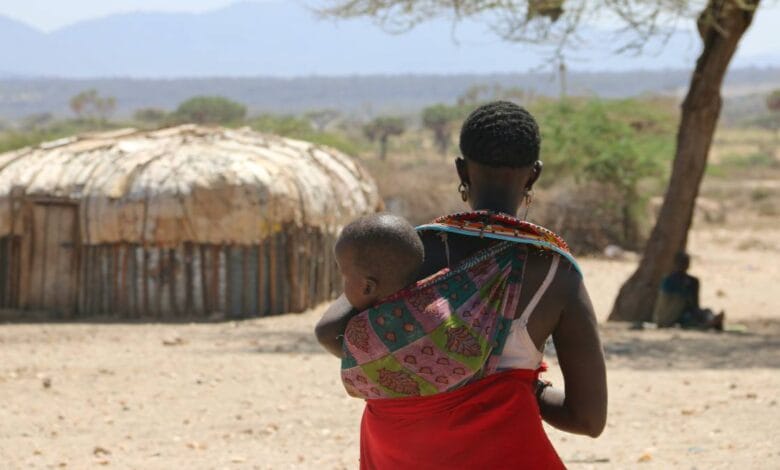
In northern Kenya, water scarcity shapes daily life. Pastoralist communities (groups of people who move from place to place raising livestock such as cattle, goats, or camels for their livelihood) often live in dry regions where water is scarce for long periods. A genomic study examined whether long-term exposure to these conditions is linked to biological changes in the human body. Researchers analyzed DNA from a pastoralist population and compared it with other groups. The results point to genetic differences connected to how the body manages water. The study focuses on inherited traits and does not describe short-term changes in physiology.
Life in the Dry Lands of Northern Kenya and What Scientists Discovered
Northern Kenya includes arid and semi arid regions where rainfall is low and unpredictable. Pastoralist communities in these areas depend on livestock such as cattle, goats, and camels. Because water sources are widely spaced, movement is often required to sustain both animals and people. Water availability can fluctuate across seasons, and shortages can last for days.
The study examined DNA from individuals in Turkana people, one of these pastoralist populations. Researchers used genomic sequencing to identify patterns in genetic variation. This method reads the full set of genetic instructions in a person’s cells and allows comparison across populations. The analysis found differences in the frequency of certain genetic variants when compared with reference groups. Some of these variants are linked to kidney function and the regulation of body fluids. The kidneys control how much water the body retains by adjusting urine concentration and filtering waste.
The researchers also analyzed signals associated with natural selection. Natural selection refers to the process where inherited traits that improve survival become more common over generations. The data indicates that some genetic variants related to water balance appear at higher levels in this population than in others.
How Human Genes may Help the Body Save Water
Several of the identified genetic variants are connected to antidiuretic hormone pathways. This hormone influences how the kidneys respond to dehydration. When active, it signals the kidneys to reduce water loss and produce more concentrated urine. The study also highlights genes involved in osmoregulation. Osmoregulation is the system that maintains stable levels of water and salts in the body. This balance supports normal cell and organ function, especially when external water intake is low.
The genetic patterns described in the study suggest that multiple genes contribute to how the body handles water stress. These genes do not act alone. They function within interconnected biological systems that regulate hydration and electrolyte levels. The findings are based on statistical associations between genetic variants and biological pathways. The study does not measure direct physiological performance under controlled dehydration conditions. It identifies links between DNA variation and known mechanisms of water regulation.
What this Means for Human Evolution and Why it is Not the Final Answer
The results fit within established models of human adaptation to environment. Populations living in arid regions face consistent pressure related to water access. Over long periods, such conditions can influence which genetic traits become more common. The study does not isolate genetics as the only factor influencing survival in dry environments. Diet, mobility patterns, and cultural practices also affect hydration and water use. These factors vary across communities and interact with biological traits.
The findings are specific to one pastoralist population and cannot be applied directly to all human groups. Different populations exposed to similar environments may develop different genetic responses depending on their history and ancestry.
Other research in human evolution shows similar patterns in different environments. Populations living at high altitude, for example, show genetic changes related to oxygen use. These comparisons indicate that environmental pressure can shape genetic variation in distinct ways. The study contributes data on how genes involved in kidney function and hormone regulation vary across populations. It does not provide a complete explanation of dehydration tolerance. Further research is needed to test how these genetic variants affect biological function under controlled conditions.
FAQs on Genetic Adaptation to Water Scarcity
Q: How do Turkana pastoralist communities manage to live in areas with very limited water supply?
A: Kenya’s Turkana pastoralist communities live in dry and semi-arid regions where water is not always available. They manage this by moving with their livestock to find water and grazing land throughout the year. This mobility is combined with deep environmental knowledge that helps them survive in unpredictable conditions.
Q: What makes Kenyan pastoralist populations unique in human genetic studies?
A: Kenyan pastoralist populations are unique because they have lived for many generations in environments with extreme water scarcity. This makes them an important group for studying how long-term environmental pressure may influence human genetics. Researchers focus on them to understand whether biological systems related to hydration have adapted over time.
Q: What exactly did scientists discover in Kenyan pastoralist DNA studies?
A: Scientists found genetic variants in some Kenya’s Turkana pastoralist groups that are linked to kidney function and water regulation. These variants are associated with how the body conserves water and maintains fluid balance. The results suggest possible adaptation, but they do not confirm direct physiological superiority.
Q: How does the human kidney respond to dehydration in arid populations?
A: The kidney responds to dehydration by reducing water loss through urine and increasing water reabsorption. In arid populations, genetic factors may support more efficient functioning of these processes. This helps maintain hydration for longer periods under water-limited conditions.
Q: What is the role of hormones in water balance for Kenyan pastoralist communities?
A: Hormones like antidiuretic hormone help regulate how much water the body retains. In Kenyan pastoralist populations, genes linked to this hormonal pathway are studied for their role in water conservation. These hormones help the body reduce water loss during dehydration.
Q: Are the genetic traits found in Kenyan pastoralists proven to improve survival?
A: No, the genetic traits identified in studies are not proven to directly improve survival. They are based on statistical associations between DNA variations and biological pathways. More experimental research is needed to confirm their exact effects on human health and survival.
Q: How is dehydration studied in relation to Kenyan pastoralist populations?
A: Dehydration is studied by analyzing genetic data and comparing it with known biological processes related to water balance. Researchers look for signals that suggest the body may conserve water more efficiently. These studies are observational and focus on long-term adaptation rather than short-term effects.
Q: What is the difference between living adaptation and genetic adaptation?
A: Living adaptation includes behaviors like migration, herd management, and seasonal movement to access resources. Genetic adaptation refers to inherited biological traits passed down over generations. Kenyan Turkana pastoralist communities rely on both behavioral and biological strategies to survive.
Q: Why do scientists compare Kenyan pastoralists with other human populations?
A: Scientists compare Kenyan Turkana pastoralists with other populations to identify genetic differences linked to environment. This helps highlight whether certain traits are more common in groups living in dry regions. Such comparisons help researchers understand human adaptation more clearly.
Q: What does this research tell us about human evolution in modern times?
A: This research shows that human evolution is still ongoing and influenced by environment. It suggests that long-term living conditions like drought can shape genetic variation in populations. However, these changes are gradual and require many generations to become significant.
Sources
- Lea AJ, Caldas IV, Garske KM, Gerlinger ER, Arroyo JP, Echwa J, Gurven M, Handley C, Kahumbu JC, Kamau J, Kinyua P. Adaptations to water stress and pastoralism in the Turkana of northwest Kenya. Science. 2025 Sep 18;389(6766):1246-51. DOI: 10.1126/science.adv2467.
- McVay K, Goldberg A. Trade-offs and human adaptation at the extremes. Science. 2025 Sep 18;389(6766):1191-2. Doi: 10.1126/science.aeb2287.
Disclaimer:
Some aspects of the webpage preparation workflow may be informed or enhanced through the use of artificial intelligence technologies. While every effort is made to ensure accuracy and clarity, readers are encouraged to consult primary sources for verification. External links are provided for convenience, and Honores does not endorse, control, or assume responsibility for their content or for any outcomes resulting from their use. The author declares no conflicts of interest in relation to the external links included. Neither the author nor the website has received any financial support, sponsorship, or external funding. This content is for informational purposes only and is not medical advice. Please consult a qualified physician before making health decisions. Images are for representational purposes only. Photo by Polina Koroleva on Unsplash.