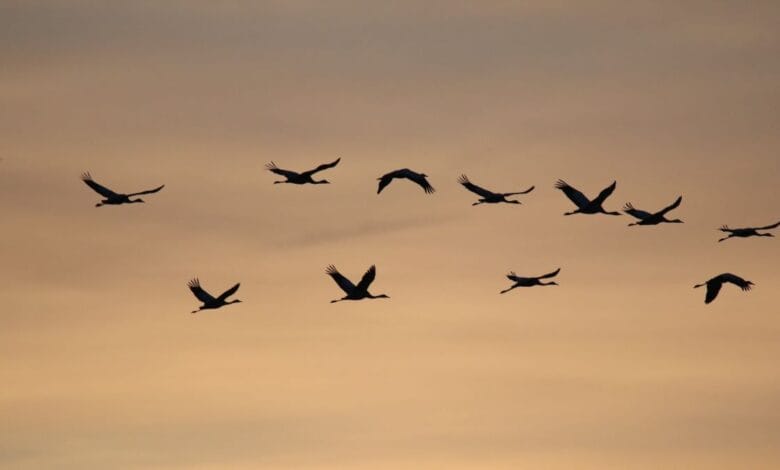
A clear blue sky has a way of drawing attention without effort. The sight of birds flying in formation often feels calm, especially when they move together in a V shaped pattern. For many, this memory goes back to childhood, when the movement of birds sparked curiosity and raised questions about its purpose. Later, it becomes clear that this is migration. Through learning, migration is understood as a system shaped by survival, timing, and changing environments.
At certain times of the year, birds move in large groups across the sky, fish travel long distances through rivers and oceans, and land animals cross wide regions. These movements follow patterns shaped over generations. A recent global assessment shows that many of these patterns are under strain. The findings raise a clear question. What is causing the decline in migratory species, and what does the data show about the pressures they face?
Why are migratory animals declining worldwide?
A United Nations backed assessment reports that nearly half of the world’s migratory animal species are in decline. Migratory species are animals that move between regions to feed, breed, or respond to seasonal changes. This group includes birds, fish, mammals, and insects. The data comes from the Convention on Migratory Species, which compiles conservation information from multiple countries. The assessment shows that about 44 percent of migratory species have decreasing population trends. It also finds that more than one in five species is threatened with extinction. These figures are based on combined data from long term monitoring, regional studies, and international biodiversity databases. This method allows comparison across regions, though data quality varies between species and locations.
Some groups show stronger declines. Migratory fish that move between freshwater and marine environments are among the most affected. Dams block migration routes and interfere with breeding. Overfishing reduces population size. Many migratory bird species also show consistent declines linked to habitat loss along migration routes. Large mammals are affected by land conversion and habitat fragmentation. The data shows a broad pattern. Declines are recorded across different species groups and regions.
What are the main threats to migratory species?
Habitat loss is the primary driver of decline. Migratory species depend on multiple habitats during their life cycle, including breeding areas, feeding grounds, and stopover sites. Each of these locations supports a specific stage of survival. Wetland drainage, deforestation, and coastal development reduce the availability of these habitats. Loss of a single site can disrupt the full migration cycle. Overexploitation is another major factor. Hunting, fishing, and bycatch affect many migratory species. In some regions, weak enforcement of regulations allows continued pressure on populations.
Climate change affects migration timing and resource availability. Changes in temperature and rainfall alter when species move and when food is available. This can create mismatches between arrival times and peak food supply. Pollution and invasive species also affect migratory populations. Chemical pollutants can accumulate in animals, especially those higher in the food chain. Invasive species can alter habitats and reduce their suitability. These pressures often occur together. Their combined effects increase the difficulty of recovery for affected species.
Why does migration increase vulnerability and why does it matter?
Migration increases exposure to risk because it depends on connected habitats across large distances. This concept is known as ecological connectivity. Each habitat along the route must remain functional for migration to continue. Disruption at any point can affect the entire population. A barrier such as a dam or the loss of a wetland can interrupt movement and reduce survival or reproduction. Migratory species also support ecosystem processes. Some species move nutrients between regions. Others influence food webs or support plant growth through seed dispersal. Changes in their populations can affect these processes.
There are economic effects as well. Migratory species contribute to fisheries, tourism, and local livelihoods. Declines can reduce these benefits. Conservation efforts focus on protecting habitats, maintaining migration routes, and regulating exploitation. Because migratory species cross national boundaries, these actions require coordination between countries. The assessment shows that multiple human driven factors are affecting migratory species. The outcome depends on the condition and connection of habitats across regions.
FAQs on Decline of Migratory Species
Q: What does it mean that migratory animals are in decline?
A: It means that a large number of migratory species are showing a decrease in their population over time. This does not mean all individuals are disappearing at once, but that long term trends show fewer animals surviving and reproducing. The decline is based on global conservation data collected from multiple regions.
Q: Why are migratory species declining across the world?
A: Migratory species are declining mainly due to habitat loss, overexploitation, and environmental changes. These animals depend on multiple locations during their life cycle, and damage to any one of these areas can affect their survival. Climate change and pollution also add to the pressure on these species.
Q: How does habitat loss affect migratory animals?
A: Habitat loss reduces the availability of key locations such as breeding grounds, feeding areas, and stopover sites. Migratory animals rely on these places at different stages of their journey. If one site is lost or damaged, the entire migration cycle can be disrupted.
Q: Which migratory animals are most affected by population decline?
A: Migratory fish, especially those that move between freshwater and oceans, are among the most affected due to dams and overfishing. Many migratory bird species are also declining بسبب habitat loss along their routes. Large mammals face threats from land use changes and habitat fragmentation.
Q: How does climate change impact migration patterns?
A: Climate change alters temperature and rainfall patterns, which can affect the timing of migration. Animals may arrive at locations when food is not available at the right time. This mismatch can reduce survival rates and affect reproduction.
Q: Why are migratory species more vulnerable than non-migratory animals?
A: Migratory species depend on a chain of connected habitats across large distances, known as ecological connectivity. This increases their exposure to threats in multiple regions. A disruption in any one part of their route can affect the entire population.

Q: How does the decline of migratory animals affect ecosystems?
A: Migratory animals play important roles such as transporting nutrients, controlling prey populations, and supporting plant growth. When their numbers decline, these ecological processes can be affected. This can lead to broader changes in ecosystem balance.
Q: Can migratory species recover from population decline?
A: Some migratory species can recover if key habitats are protected and threats like overexploitation are reduced. Conservation efforts such as restoring migration routes and enforcing wildlife laws have shown positive results in certain areas. However, recovery often requires coordinated action across countries.
Q: What role do humans play in migratory species decline?
A: Human activities such as deforestation, urban development, dam construction, and overfishing directly impact migratory species. These actions change or destroy the habitats that animals depend on. Indirect effects like climate change also contribute to long term population decline.
Sources
- United Nations University. 5 key findings on migratory species decline. 10 Mar 2026. Available from: https://unu.edu/ehs/article/5-key-findings-how-nearly-half-worlds-migratory-animal-species-are-decline
- The UN Environment Programme World Conservation Monitoring Centre (UNEP-WCMC). Plight of migratory species is worsening, new report finds ahead of global wildlife meeting. Mar 2026. Available from: https://www.unep-wcmc.org/en/news/plight-of-migratory-species-is-worsening-new-report-finds-ahead-of-global-wildlife-meeting
- UNEP-WCMC, 2024. State of the World’s Migratory Species. UNEP-WCMC, Cambridge, United Kingdom. 2024. Available from: https://www.cms.int/sites/default/files/publication/State%20of%20the%20Worlds%20Migratory%20Species%20report_E.pdf
Disclaimer:
Some aspects of the webpage preparation workflow may be informed or enhanced through the use of artificial intelligence technologies. While every effort is made to ensure accuracy and clarity, readers are encouraged to consult primary sources for verification. External links are provided for convenience, and Honores does not endorse, control, or assume responsibility for their content or for any outcomes resulting from their use. The author declares no conflicts of interest in relation to the external links included. Neither the author nor the website has received any financial support, sponsorship, or external funding. This content is for informational purposes only and is not medical advice. Please consult a qualified physician before making health decisions. Images are for representational purposes only. Image by NathalieBurblis from Pixabay.