According to WHO, about 1.3 billion people smoke worldwide, consuming nearly 15 billion cigarettes each day, adding up to over 5 trillion cigarettes annually. The global tobacco market is valued at close to one trillion dollars, making it one of the largest consumer industries in the world. At the same time, smoking creates a major economic burden, costing the global economy over one trillion dollars each year through healthcare expenses, lost productivity, increased absenteeism, and long-term financial strain on businesses, communities, and public systems.
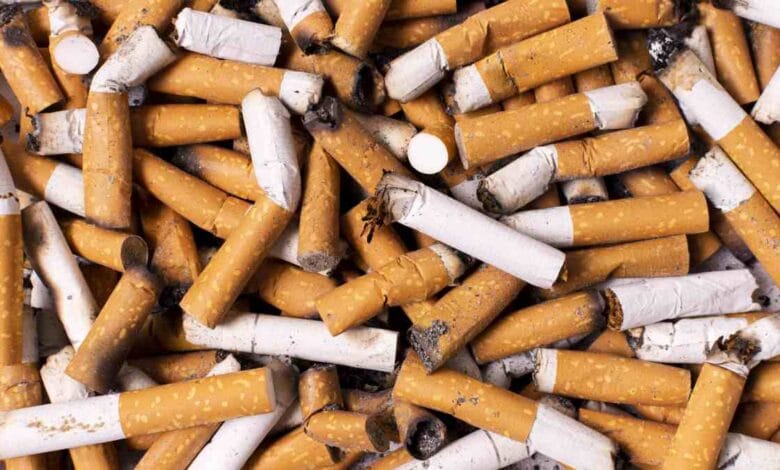
Each cigarette consumed also leaves behind a physical trace in the form of a discarded filter. You might see one on the ground, crushed under a shoe or washed into a drain, and assume it will simply disappear. But what if that disappearance is not real? What if the cigarette butt does not go away, but instead changes into something harder to see and much harder to remove? Scientists are now uncovering a quiet and long-lasting problem hidden inside these tiny pieces of waste. The evidence raises an important question. Are cigarette butts actually biodegrading, or are they slowly turning into a form of pollution we cannot easily detect?
Do cigarette butts really biodegrade?
Cigarette butts do not fully biodegrade. Instead of breaking down completely into natural substances, cigarette filters slowly break apart into smaller plastic pieces that remain in the environment. Researchers tested this by placing about 12,000 cigarette butts in different environments such as grassland soil, sandy soil, and laboratory settings. The study lasted up to 3,600 days, which is nearly ten years. This long-term approach allowed scientists to observe how cigarette filters change over time in real conditions.
At first, the cigarette butts lost weight quickly. Within the first month, they lost about 15 to 20 percent of their mass. This early loss happened because water removed soluble chemicals and loose surface material. However, this process slowed down after the initial phase. Over the next two years, the total breakdown only reached about 30 to 35 percent in most environments. Even after ten years, no sample completely disappeared. The highest level of breakdown reached 84 percent in nutrient-rich soil, while some samples lost only about half their mass.
The reason for this slow and incomplete breakdown is the material inside cigarette filters. Cigarette filters are made from cellulose acetate, which is a type of plastic polymer. A polymer is a material made of long chains of molecules designed to be strong and durable. Even though cellulose acetate comes from plant material, it behaves like plastic and resists natural decomposition. This means cigarette butts do not truly biodegrade. They only partially break down and leave behind plastic residue that can stay in soil and water for many years.
How do cigarette filters turn into microplastics?
Cigarette filters turn into microplastics through a process called fragmentation. Fragmentation means large materials break into smaller pieces instead of disappearing. At the microscopic level, cigarette filters are made of tightly packed plastic fibers. Over time, sunlight, water, and physical movement weaken these fibers. Instead of dissolving, the fibers split, curl, and break into tiny particles. Scientists observed that these fibers change shape and mix with soil particles and organic matter. In some cases, they form small structures about 6 micrometers in size.
Other studies confirm that cigarette filters release microfibers into water. Microfibers are tiny thread-like plastic particles. Experiments show that cigarette filters can release between about 5 and 93 microfibers per gram over periods ranging from 1 to 60 days. The number of released microfibers increases with time and environmental exposure. Conditions such as seawater and outdoor weathering lead to higher release rates. Most of these particles fall within the size range of 20 to 50 micrometers, which is classified as microplastic. As these particles spread through soil and water, they can travel far beyond their original source, which explains why scientists are now finding them even in remote environments like microplastics in Arctic lakes, far from direct human activity.
Researchers estimate that cigarette filters release between 14 trillion and 51 trillion microfibers into aquatic environments each year. This estimate is based on worldwide cigarette use and measured release rates. This process shows that cigarette butts do not disappear. Instead, they transform into smaller plastic particles that spread more easily through soil and water.
Why is cigarette butt pollution a concern?
As cigarette filters break into microplastics, they also release chemicals trapped inside them. These chemicals can enter soil and water systems. Microplastics can carry these substances and move through ecosystems, increasing the chance of exposure to living organisms. Microplastics often remain hidden even when pollution seems to disappear, and similar invisible contamination has already been found in everyday drinking sources like microplastics in bottled water, where tiny plastic particles exist even when the water looks completely clean.
Values above certain levels suggest that these microfibers may pose risks, especially in aquatic environments where organisms can easily absorb them. Microplastics have been found in human blood, lung tissue, placenta, and feces. Scientists believe people can be exposed through inhalation, ingestion, and skin contact.
Laboratory studies show that microplastics may cause oxidative stress and inflammation in cells. Oxidative stress is a condition where harmful molecules damage cells, while inflammation is the body’s response to injury or irritation. Even older cigarette butts can still affect biological systems. Research shows that while toxicity decreases over time, it does not fully disappear.
Cigarette butts are not biodegradable waste. They are a long-term source of microplastic pollution that can persist, spread, and interact with the environment in ways that are not immediately visible. What looks like a small and temporary piece of trash may actually be part of a much larger and longer-lasting environmental problem.
FAQs on Cigarette Butts Microplastic Pollution
Q: Do cigarette butts biodegrade or break down naturally?
A: Cigarette butts do not fully biodegrade in natural environments. Instead of breaking down into harmless substances, they slowly fragment into smaller plastic particles. This process leaves behind microplastics that can persist in soil and water for years.
Q: Why are cigarette filters considered a source of microplastic pollution?
A: Cigarette filters are made from cellulose acetate, a plastic polymer that does not fully decompose. Over time, these filters break into tiny fibers and particles, which are classified as microplastics. These particles can spread easily through ecosystems and contribute to long-term pollution.
Q: How long does it take for cigarette butts to decompose in the environment?
A: Cigarette butts can take many years to partially break down, but they do not completely disappear. Studies show that even after a decade, significant portions of the filter material remain. The remaining material continues to exist as smaller plastic fragments rather than fully decomposing.
Q: How do cigarette butts turn into microplastics over time?
A: Cigarette butts turn into microplastics through a process called fragmentation. Exposure to sunlight, moisture, and physical stress causes the plastic fibers in filters to break apart. These fibers gradually become smaller particles that mix with soil and water systems.
Q: How many cigarette butts are discarded globally each year?
A: More than 5 trillion cigarettes are consumed and discarded globally every year. This makes cigarette butts one of the most common forms of litter worldwide. Their widespread presence significantly increases their impact on environmental pollution.
Q: Are microplastics from cigarette filters harmful to ecosystems?
A: Research suggests that microplastics from cigarette filters can pose risks to ecosystems. These particles can carry toxic chemicals and be absorbed by small organisms in soil and water. Over time, this may disrupt ecological balance, although long-term field impacts are still being studied.
Q: Can cigarette butt microplastics affect human health?
A: Microplastics have been detected in human tissues such as blood and lungs, indicating possible exposure. Laboratory studies suggest they may cause inflammation and cellular stress. However, direct long-term health effects in humans are still under investigation and not yet fully established.
Q: What is cellulose acetate and why does it not fully biodegrade?
A: Cellulose acetate is a chemically modified form of cellulose used in cigarette filters. Although it originates from plant material, its structure behaves like plastic and resists microbial breakdown. This is why it fragments instead of fully decomposing in natural environments.
Q: Why are cigarette butts considered one of the most widespread forms of waste?
A: Cigarette butts are small, lightweight, and often discarded improperly, making them easy to spread through urban and natural environments. Because billions are discarded daily, they accumulate quickly across land and water systems. Their persistence further increases their environmental impact.
Q: What happens to cigarette filters after they disappear from sight?
A: When cigarette filters seem to disappear, they do not actually vanish. Instead, they break down into smaller plastic particles that remain in the environment. This hidden transformation makes them a long-term source of microplastic pollution.
External Sources
- Bonanomi G, Iacomino G, D’Esposito D, Monti MM, Siciliano A, Santorufo L, Spampinato M, Ruocco M, Verrillo MV, Spaccini R, Abd-ElGawad AM. Long-term cigarette butts’ decomposition over 10 years reveals multi-stage microbial, chemical, and toxicological transformations. Environmental Pollution. 2026 Mar 10:127944. Doi: 10.1016/j.envpol.2026.127944.
- Śniadach J, Kicman A, Szymkowiak S, Waszkiewicz N. The hidden threat of microplastics in traditional cigarettes: a narrative review of health and environmental risks. Journal of Clinical Medicine. 2025 May 26;14(11):3721. Doi: 10.3390/jcm14113721.
- Mohammadi A, Bahrani F, De-la-Torre GE, Saeedi R, Renner G, Schmidt TC, Dobaradaran S. Cigarette filters as a major source of microfibers in aquatic environments. Scientific Reports. 2025 Oct 22;15(1):36980. Doi: 10.1038/s41598-025-20771-7.
Disclaimer:
Health Warning: Consumption of tobacco is injurious to health. Some aspects of the webpage preparation workflow may be informed or enhanced through the use of artificial intelligence technologies. While every effort is made to ensure accuracy and clarity, readers are encouraged to consult primary sources for verification. External links are provided for convenience, and Honores does not endorse, control, or assume responsibility for their content or for any outcomes resulting from their use. The author declares no conflicts of interest in relation to the external links included. Neither the author nor the website has received any financial support, sponsorship, or external funding. This content is for informational purposes only and is not medical advice. Please consult a qualified physician before making health decisions. Images are for representational purposes only. Image by freepik.