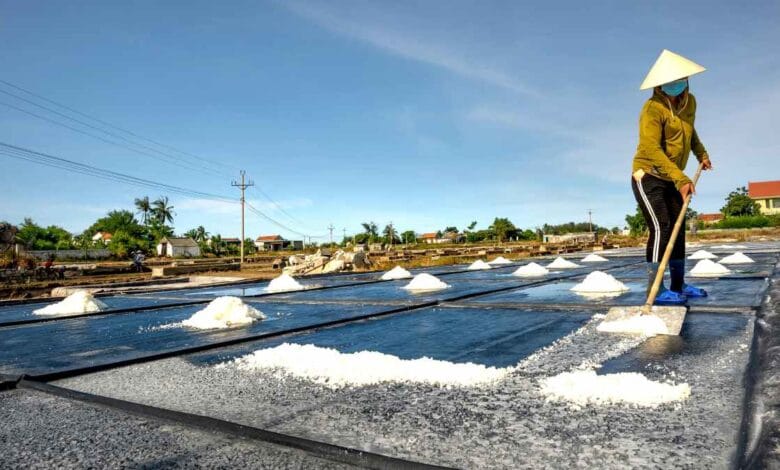
The ocean may look calm on the surface, but deep inside it is always changing. One important feature scientists watch closely is ocean salinity, which means how salty seawater is. Salt levels in the ocean help control how water moves, how heat travels across the planet, and how marine life survives. A new study published in the journal Nature Climate Change has revealed something surprising. One of the saltiest parts of the world’s oceans is slowly losing its salt. Scientists say this change has been happening for about sixty years and may be linked to climate change.
A Salty Ocean Region is Slowly Becoming Fresher
The study focused on the Southern Indian Ocean, especially the area west of Australia. For many years this region was known for having some of the saltiest surface waters on Earth. The reason was simple. The area is very dry and receives little rainfall. At the same time, strong sunshine causes a lot of water to evaporate. When water evaporates, the salt stays behind, which makes the seawater even saltier. But scientists studying long term ocean data noticed something unusual. The salty area has been shrinking over time. According to the research, the region that once held the highest salt concentration has decreased by about 30 percent in the past sixty years.
Researchers used several types of data to understand this change. They looked at old ship measurements, modern satellite observations, and records from ocean sensors that float in the water. By combining all these sources, scientists were able to track how salt levels changed over many decades. Their results show that the Southern Indian Ocean is experiencing one of the fastest freshening trends seen in the Southern Hemisphere.
How Climate Change is Changing Ocean Salinity
The main reason behind this change appears to be shifting wind patterns caused by a warming climate. As global temperatures rise, winds in the Southern Hemisphere are also changing. These winds play an important role in moving ocean water across large distances. When wind patterns shift, they can push ocean currents in new directions. In this case, scientists found that winds are now carrying more freshwater into the salty region from other parts of the ocean. Over time, this incoming freshwater mixes with the salty water and slowly dilutes it. Even small changes in salinity can have important effects because salt helps control how ocean water moves.
Ocean circulation depends on differences in water density. Density is determined by both temperature and salinity. Cold and salty water is heavier and tends to sink. Warm or less salty water is lighter and stays closer to the surface. This movement forms a huge system of global ocean currents known as Thermohaline circulation. These currents transport heat, carbon, and nutrients around the world’s oceans. If a region becomes less salty, the water may not sink as easily as before. That can change how ocean layers mix and how currents move.
Why Ocean Freshening Matters for Marine Life and Climate
Changes in ocean salinity do not only affect currents. They can also influence marine ecosystems. Salt levels play a role in ocean chemistry and nutrient distribution. Many tiny organisms in the ocean depend on these nutrients to grow. Among them are plankton and seagrasses, which form the base of many marine food chains. If salinity shifts, nutrient flows may change as well. This can affect plankton populations and eventually impact fish, marine animals, and entire ecosystems.
Another related process is called Ocean stratification. Stratification happens when layers of water with different densities form separate levels in the ocean. When stratification becomes stronger, it becomes harder for water to mix between layers. Mixing is important because it brings nutrients from deeper waters to the surface. Without this movement, marine life near the surface may receive fewer nutrients.
Scientists also pay attention to salinity because it reveals changes in the global water cycle. When some ocean regions become saltier and others become fresher, it usually means that evaporation, rainfall, and ocean circulation are shifting. The recent freshening in the Southern Indian Ocean appears to be part of this larger global pattern. Researchers say the discovery does not mean global ocean circulation is about to collapse. However, it does show that the ocean is very sensitive to small environmental changes.
For climate scientists, salinity is like a long term record of how water moves across the planet. Temperature can change quickly, but salinity often reflects deeper changes in evaporation, rainfall, and ocean currents. The study therefore offers an important clue about how climate change is reshaping the oceans. In the coming years, scientists will continue studying how salinity changes interact with other factors such as ocean warming, melting ice, and shifting currents. Understanding these connections will help researchers predict how Earth’s oceans may respond to future climate change.
For now, one thing is clear. Even in a place that was once famous for its salty water, the ocean is slowly changing. And that change is telling scientists an important story about the planet’s climate system.
FAQs on why Ocean is Losing Salt
Q: Why is ocean salinity important for Earth’s climate?
A: Ocean salinity plays a major role in controlling how seawater moves around the planet. Salt levels affect water density, which helps drive global ocean currents such as Thermohaline circulation. These currents transport heat, carbon, and nutrients across the oceans and influence weather and climate patterns worldwide.
Q: Why is the Southern Indian Ocean losing salt?
A: Scientists believe the freshening is mainly caused by climate driven changes in wind patterns. These shifting winds move ocean currents and bring more freshwater into the region from other parts of the ocean. Over time, this incoming freshwater dilutes the salty water and lowers the overall salinity.
Q: What did the new study discover about the Southern Indian Ocean?
A: A study published in Nature Climate Change found that the area with the highest salt concentration in the Southern Indian Ocean has shrunk by about 30 percent over the past sixty years. Researchers describe this as one of the fastest large scale freshening trends recorded in the Southern Hemisphere. The change appears to be linked to climate driven shifts in atmospheric circulation.
Q: How do scientists measure ocean salinity?
A: Scientists measure ocean salinity using a combination of research ships, floating ocean sensors, and satellites. Instruments placed in the water collect data about salt concentration at different depths. Satellite technology can also estimate surface salinity across large parts of the ocean.


Q: What causes seawater to become less salty?
A: Seawater becomes less salty when freshwater enters the ocean faster than salt accumulates. This can happen due to rainfall, melting ice, or ocean currents transporting fresher water into a region. Climate change can intensify these processes by altering wind systems and precipitation patterns.
Q: Could ocean freshening affect marine ecosystems?
A: Yes, changes in salinity can influence marine ecosystems. Salt levels affect nutrient movement and ocean chemistry, which are important for plankton and other small organisms at the base of the food chain. Even small shifts in salinity may eventually affect fish populations and marine biodiversity.
Q: Does ocean freshening affect ocean currents?
A: Ocean currents depend partly on differences in temperature and salinity. If salinity drops in certain regions, the density of seawater changes and this can influence how water sinks or rises. Over long periods, these changes may alter circulation patterns within the global ocean system.
Q: What is ocean stratification and why does it matter?
A: Ocean stratification occurs when layers of ocean water with different densities form and prevent mixing between them. Strong stratification can limit the movement of heat, oxygen, and nutrients between deep and surface waters. This can affect marine productivity and ecosystem health.
Q: Is the entire ocean becoming less salty?
A: No, the entire ocean is not losing salt. Some regions are becoming fresher while others are becoming saltier. These opposite trends reflect changes in the global water cycle caused by warming temperatures, shifting winds, and altered rainfall patterns.
Q: How is climate change affecting ocean salinity patterns?
A: Climate change is strengthening the global water cycle, which means wetter regions are getting more rainfall while dry regions experience stronger evaporation. These changes alter how freshwater is distributed across the oceans. As a result, salinity patterns are shifting in different parts of the world’s oceans.
External Sources:
- Chen G, Han W, Hu A, Meehl GA, Gordon AL, Shinoda T, Rosenbloom N, Zhang L, Masumoto Y. The expanding Indo-Pacific freshwater pool and changing freshwater pathway in the South Indian Ocean. Nature Climate Change. 2026 Feb 3:1-0. Doi: 10.1038/s41558-025-02553-1.
- Röthig T, Trevathan‐Tackett SM, Voolstra CR, Ross C, Chaffron S, Durack PJ, Warmuth LM, Sweet M. Human‐induced salinity changes impact marine organisms and ecosystems. Global change biology. 2023 Sep;29(17):4731-49. Doi: 10.1111/gcb.16859.
- Yasir Haya LO, Palupi RD, Subhan S, Rahmadani R. Patterns of coral diseases linked to the impact of climate change: a case study of scleractinia corals in Southeast Sulawesi, Indonesia’s coral triangle. Modeling Earth Systems and Environment. 2023 Nov;9(4):4265-77. Doi: 10.1111/1462-2920.12107.
- Wikipedia. Thermohaline circulation. Available from: https://en.wikipedia.org/wiki/Thermohaline_circulation
- Wikipedia. Ocean stratification. Available from: https://en.wikipedia.org/wiki/Ocean_stratification
Disclaimer:
Some aspects of the webpage preparation workflow may be informed or enhanced through the use of artificial intelligence technologies. While every effort is made to ensure accuracy and clarity, readers are encouraged to consult primary sources for verification. External links are provided for convenience, and Honores does not endorse, control, or assume responsibility for their content or for any outcomes resulting from their use. The author declares no conflicts of interest in relation to the external links included. Neither the author nor the website has received any financial support, sponsorship, or external funding. Photo by Quang Nguyen Vinh.