Human space missions require more than advanced rockets and spacecraft. Astronauts need reliable & continuous access to basic necessities such as food, water, breathable air, protection from radiation, and safe shelter. Providing these supplies from Earth becomes increasingly difficult as missions grow longer and travel farther from our planet. Just like researchers studied how bacteria can help build structures on Mars, they are also exploring ways to produce some of the resources directly on the Moon.
One resource drawing particular attention is oxygen. Astronauts need it for breathing, and rockets use it as an oxidizer in fuel. Carrying large oxygen supplies from Earth adds weight and cost to every mission. Researchers are therefore studying whether oxygen trapped inside the Moon’s soil can be extracted and used to support long term human activity on the lunar surface.
Oxygen Hidden Inside Moon Soil
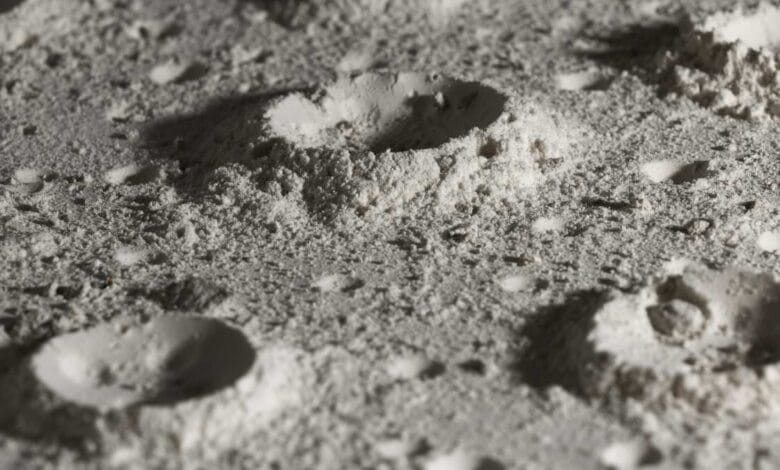
The Moon’s surface is covered by a layer of dust and broken rock called lunar regolith. This material contains a large amount of oxygen by mass. Studies show that about 40 to 45 percent of lunar soil is oxygen. The oxygen is not present as a gas. It is chemically bound inside minerals that contain elements such as iron, silicon, and titanium. These minerals form oxides, where oxygen atoms are attached to other elements. To use the oxygen, those chemical bonds must be separated so the oxygen can be released as gas. If extraction systems work, the oxygen could support life support systems in lunar habitats. It could also be used as an oxidizer in rocket propellant, which is required for spacecraft engines.
New Technologies to Extract Oxygen
Space agencies are developing systems that extract oxygen directly from lunar soil. This approach is called in situ resource utilization, often shortened to ISRU. The concept focuses on using materials found on the Moon rather than transporting them from Earth. One method under development is molten salt electrolysis. Engineers at the European Space Agency are studying this process. In this method, powdered lunar soil is placed in a container with molten salt such as calcium chloride. The salt is heated to about 950 degrees Celsius until it becomes liquid.
An electric current passes through the molten salt. Oxygen ions in the minerals move through the liquid toward an electrode, Anode. At the anode, the oxygen forms oxygen gas. Metallic elements remain at the other electrode, Cathode. Experiments with lunar soil simulants have shown that this method can extract a large portion of the bound oxygen. The process also leaves metal powders that include iron, aluminum, and silicon.
NASA is also studying other approaches. One project is called carbothermal reduction. This method uses concentrated sunlight as a heat source. Mirrors focus sunlight onto lunar soil inside a reactor. The heat drives chemical reactions that reduce the soil and produce gases that can later be processed to obtain oxygen. Researchers are also testing solar vacuum pyrolysis. The Moon has an extremely thin atmosphere, which creates a natural vacuum environment. In laboratory studies, scientists use concentrated sunlight under low pressure to heat lunar soil. The heating process releases a small portion of the oxygen contained in the soil. Experiments have produced only a fraction of the total oxygen, but the results show that the reaction occurs under controlled conditions.
Challenges of Producing Oxygen on the Moon
Several engineering challenges remain before these methods can operate on the Moon. Oxygen extraction requires energy, and systems must work under lunar environmental conditions. Lunar dust is very fine and abrasive. It can damage mechanical parts and interfere with equipment. Temperature changes are also large. The surface experiences extreme heat during the lunar day and very low temperatures during the lunar night.
Engineers must also design systems to capture and store the oxygen that is produced. This includes equipment that collects the gas, compresses it, and stores it in tanks. Power supply is another constraint because the lunar night lasts up to fourteen Earth days. The European Space Agency has begun development work on compact oxygen extraction systems. Some experimental designs aim to process lunar regolith and measure how much oxygen can be produced during one lunar day. These tests help evaluate efficiency and system reliability.
Future lunar infrastructure that depends on oxygen extraction must also consider geological risks, because the Moon is slowly shrinking as its interior cools, creating young tectonic ridges and possible moonquakes that could affect landing sites and surface operations.
Why Lunar Oxygen Could Change Space Exploration
Producing oxygen from lunar soil could reduce the amount of material transported from Earth. Oxygen generated on the Moon could support life support systems for astronauts living in lunar habitats. The same oxygen could also serve as the oxidizer for rocket propellant. This would allow spacecraft to refuel on the Moon before traveling to other destinations. Programs such as NASA’s Artemis missions include plans for human activity on the lunar surface. Future robotic and human missions are expected to collect data on regolith composition and site conditions. These missions may test oxygen extraction systems on the Moon within the next decade.
FAQs on Researchers are Trying to Turn Moon Dust Into Oxygen
Q: How can scientists extract oxygen from the Moon’s soil?
A: Scientists use special technologies to separate oxygen that is chemically bound inside lunar soil minerals. Methods such as molten salt electrolysis pass electricity through heated salts to release oxygen from the soil. Solar based techniques also use concentrated sunlight to trigger chemical reactions that free oxygen as a gas that can be collected.
Q: Why is oxygen extraction from lunar regolith important for future Moon missions?
A: Oxygen is essential for astronauts to breathe and is also used as an oxidizer in rocket propellant. Producing oxygen directly on the Moon could reduce the need to transport heavy supplies from Earth. This capability would make long term lunar bases and deeper space missions more practical.
Q: What percentage of the Moon’s soil is made of oxygen?
A: Lunar regolith contains a large amount of oxygen by mass. Scientific estimates show that roughly 40 to 45 percent of lunar soil consists of oxygen bound within mineral oxides such as iron oxide and silicon oxide. However, this oxygen must be chemically separated before it can be used.
Q: What technologies are being developed to produce oxygen on the Moon?
A: Space agencies are developing several approaches to release oxygen from lunar minerals. These include molten salt electrolysis, carbothermal reduction, and solar vacuum pyrolysis. Each method uses heat, electricity, or sunlight to break chemical bonds in lunar soil and release oxygen gas.

Q: Can lunar oxygen be used as rocket fuel for space missions?
A: Oxygen itself is not a fuel but an oxidizer that allows rocket fuel to burn efficiently. If oxygen can be produced on the Moon, spacecraft could combine it with fuels such as hydrogen or methane. This would allow rockets to refuel on the lunar surface before traveling farther into space.
Q: How does molten salt electrolysis work for extracting oxygen from Moon soil?
A: In molten salt electrolysis, powdered lunar soil is placed in a container filled with heated molten salt such as calcium chloride. Electricity is passed through the liquid salt, which causes oxygen ions in the minerals to move toward an electrode. At that point the oxygen is released as gas while metal elements remain behind.
Q: What challenges do engineers face when producing oxygen on the Moon?
A: Oxygen extraction systems must work in extreme lunar conditions. The Moon experiences large temperature swings and has abrasive dust that can damage equipment. Engineers must also design systems that capture, compress, and store the oxygen while operating with limited power resources.
Q: Could astronauts live on the Moon using oxygen produced from lunar soil?
A: If oxygen extraction technologies work reliably, they could support life support systems inside lunar habitats. Astronauts would be able to breathe oxygen produced from local resources instead of relying only on supplies from Earth. This approach could help support long duration human missions on the Moon.
Q: When might oxygen production from lunar regolith be tested on the Moon?
A: Space agencies are currently testing oxygen extraction technologies in laboratories and lunar simulation environments on Earth. Future robotic and human missions, including planned lunar exploration programs, may test these systems on the Moon within the next decade. Early demonstrations will help determine how practical large scale oxygen production could be.
External Sources:
- Robinot J, Rodat S, Abanades S, Paillet A, Cowley A. Review of in-situ oxygen extraction from lunar regolith with focus on solar thermal and laser vacuum pyrolysis. Acta Astronautica. 2025 Sep 1;234:242-59. Doi: 10.1016/j.actaastro.2025.05.008.
- Robinot J, Rodat S, Abanades S, Bêche E, Paillet A, Cowley A. Quantification of Oxygen Production from Solar Pyrolysis of Lunar Regolith. Advances in Space Research. 2026 Feb 4. Doi: 10.1016/j.asr.2026.02.003.
- European Space Agency. Turning Moon dust into oxygen. Available form: https://www.esa.int/Science_Exploration/Human_and_Robotic_Exploration/Turning_Moon_dust_into_oxygen
- European Space Agency. ESA opens oxygen plant – making air out of moondust. Available form: https://www.esa.int/Enabling_Support/Space_Engineering_Technology/ESA_opens_oxygen_plant_making_air_out_of_moondust
- Johnson Space Center Office of Communications, National Aeronautics and Space Administration (NASA). Sunlight Extracts Oxygen From Regolith Using Solar Chemistry. Available from: https://www.nasa.gov/centers-and-facilities/johnson/sunlight-extracts-oxygen-from-regolith-using-solar-chemistry/
- National Aeronautics and Space Administration (NASA). Lunar South Pole Oxygen Pipeline. Available from: https://www.nasa.gov/general/lunar-south-pole-oxygen-pipeline/
Disclaimer:
Some aspects of the webpage preparation workflow may be informed or enhanced through the use of artificial intelligence technologies. While every effort is made to ensure accuracy and clarity, readers are encouraged to consult primary sources for verification. External links are provided for convenience, and Honores does not endorse, control, or assume responsibility for their content or for any outcomes resulting from their use. The author declares no conflicts of interest in relation to the external links included. Neither the author nor the website has received any financial support, sponsorship, or external funding. Image by freepik.