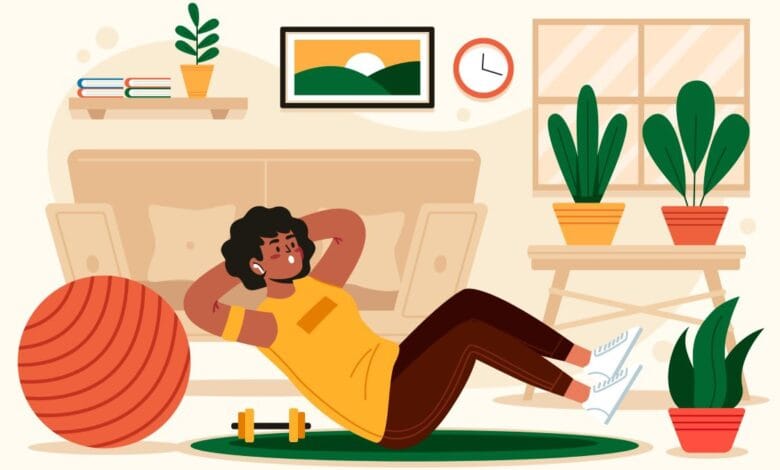
Many people grow up hearing the same advice; the so called advise. If you want to lose weight, you need to exercise more. The idea sounds simple. Move your body, burn calories, and watch the numbers on the scale go down. But for many people, that is not what happens. They start walking, running, or going to the gym, yet their weight barely changes. This can feel confusing and frustrating, especially when so much effort is involved.
Scientists have been studying this problem for years, and their findings tell an interesting story. Exercise is very good for the body, but it often leads to smaller weight changes than most people expect. This does not mean exercise is useless. It means the human body is more complex than a simple calories in, calories out equation. To understand why exercise is not always helping in losing weight, it helps to look at how the body uses energy. When you exercise, your muscles need fuel. That fuel comes from calories. Traditional thinking says that if you burn more calories through activity, you should lose fat. In reality, the body has systems that work to keep energy use within a certain range.
Researchers have found that when people increase their physical activity, the body often adjusts in other ways. This process is known as energy compensation. For example, after a hard workout, a person may feel more tired and move less for the rest of the day. Small movements like standing, walking, or fidgeting may decrease without the person noticing. As a result, the total energy burned over the entire day does not rise as much as expected. Another part of energy compensation involves metabolism. Metabolism is the set of processes that keep the body alive, such as breathing, digesting food, and keeping warm. Some studies show that when exercise levels go up, the resting metabolic rate can drop slightly. This means the body becomes more efficient and uses fewer calories for basic tasks.
One of the strongest tools scientists use to study energy use is called the doubly labeled water method. This method tracks how much energy a person uses in real life over several days or weeks. Research using this technique has shown that total daily energy use increases with exercise at first, but then levels off. Even people who are very active do not burn unlimited calories. Instead, the body seems to set a ceiling on energy use. Hunger also plays a major role. Exercise can increase appetite, especially when workouts are long or intense. Hormones that control hunger respond to physical activity. After exercise, some people feel hungrier and eat more food without planning to. Even small increases in daily eating can cancel out the calories burned during workouts. This does not happen to everyone in the same way. Some people lose weight with exercise alone, while others do not. Genetics, sleep, stress, and diet all influence how the body responds. This is why two people can follow the same exercise plan and see very different results.
When scientists look at large groups of people, patterns become clearer. Reviews of exercise studies, where people added physical activity without changing their diet, show that average weight loss is usually modest. Fat mass may decrease, but total body weight often changes very little. Over time, the scale may stop moving even though the body is getting stronger and healthier. This is where the difference between weight and health becomes important. Exercise improves heart health, lowers blood pressure, and helps the body use insulin more effectively. It also supports mental health and reduces the risk of many chronic diseases. These benefits happen even when body weight stays the same.
Some of this confusion comes from how society talks about exercise. Weight loss is often treated as the main goal, while other benefits are ignored. Health organizations like the World Health Organization and the American College of Sports Medicine now emphasize that exercise is essential for health, but weight loss usually requires changes in diet as well. There is also a larger picture to consider. In many high income countries, people are exercising more in their free time than in the past. At the same time, obesity rates continue to rise. This may seem surprising, but it reflects changes in food availability, portion sizes, and sedentary jobs. Exercise alone often cannot overcome these powerful forces.
Another reason the scale may not change is muscle gain. Exercise, especially strength training, builds muscle. Muscle weighs more than fat, so fat loss can be hidden by muscle gain. A person may look and feel healthier, even though the number on the scale stays the same. It is also important to understand metabolic adaptation during weight loss. As body weight decreases, the body needs fewer calories to function. This makes further weight loss harder. Exercise does not fully cancel out this effect. Instead, it works within these limits.
Stories in the media have helped bring this research to public attention. Reports discussed in outlets like New Scientist highlight how simplified messages about exercise and weight loss can mislead people. The science shows that effort does not always lead to large changes on the scale. This does not mean exercise is failing. It means its role has been misunderstood. Exercise is excellent for keeping weight stable after weight loss. It helps people maintain health, strength, and independence as they age. It also improves mood and energy levels.
Thinking about exercise as a punishment for eating or as a tool only for weight loss can be discouraging. A better approach is to see it as a way to support the body. When expectations are realistic, exercise becomes easier to stick with. Scientists are now studying why some people respond better to exercise for weight loss than others. Future research may help create more personalized plans that combine diet, activity, and lifestyle factors. For now, the evidence suggests that exercise alone rarely leads to large weight loss for most people.
The key message is simple but important. Exercise is one of the best things you can do for your health. It strengthens the heart, improves blood sugar control, and supports mental wellbeing. If weight loss happens, it is influenced by many factors working together. Understanding this can help people focus on health, not just the scale.
FAQs on why Exercise is not helping with weight loss
Q: Why is exercise not helping with weight loss for many people?
A: Exercise often leads to smaller weight loss than expected because the body compensates by increasing hunger or reducing energy use elsewhere. These biological responses can narrow or cancel the calorie deficit created by physical activity.
Q: Does exercise burn fewer calories than fitness trackers show?
A: Fitness trackers estimate calories burned during activity, but they do not account for how the body adjusts total daily energy use. Research shows that total energy expenditure may plateau as activity increases, leading to less overall calorie burn than predicted.
Q: What is energy compensation in weight loss?
A: Energy compensation happens when the body responds to exercise by conserving energy or increasing appetite. This can include eating more food or unconsciously moving less during the rest of the day, which reduces fat loss.
Q: Can exercise increase hunger and appetite?
A: Yes, exercise can increase hunger in some people, especially after intense or long workouts. Hormones that control appetite respond to physical activity and may lead to higher food intake after exercise.
Q: Why do some people lose weight with exercise while others do not?
A: Responses to exercise vary widely between individuals. Genetics, metabolism, diet, sleep, stress, and baseline health all influence whether exercise leads to noticeable weight loss.
Q: Does exercise still improve health even without weight loss?
A: Exercise improves heart health, blood sugar control, blood pressure, muscle strength, and mental wellbeing even if body weight does not change. Health benefits from physical activity are well documented and do not depend on weight loss.
Q: Is diet more important than exercise for weight loss?
A: Evidence shows that dietary changes are usually required for meaningful weight loss. Exercise supports weight management but is more effective when combined with changes in food intake.
Q: Why does weight loss slow down over time even with regular exercise?
A: As body weight decreases, the body needs fewer calories and becomes more energy efficient. This metabolic adaptation makes continued weight loss harder and limits the impact of exercise alone.
Q: Should people stop exercising if they are not losing weight?
A: No. Exercise plays a key role in overall health and helps maintain weight after loss. It also improves body composition by increasing muscle mass, which may not be reflected on the scale.
External Sources:
- Pontzer H, Trexler ET. The evidence for constrained total energy expenditure in humans and other animals. Current Biology. 2026 Feb 6. Doi: 10.1016/j.cub.2026.01.025.
- MacKenzie-Shalders K, Kelly JT, So D, Coffey VG, Byrne NM. The effect of exercise interventions on resting metabolic rate: A systematic review and meta-analysis. Journal of sports sciences. 2020 Jul 17;38(14):1635-49. Doi: 10.1080/02640414.2020.1754716.
- Gonzalez JT, Batterham AM, Atkinson G, Thompson D. Perspective: is the response of human energy expenditure to increased physical activity additive or constrained?. Advances in Nutrition. 2023 May 1;14(3):406-19. Doi: 10.1016/j.advnut.2023.02.003.
- Thompson D, Del Angel M, Nunes MA, Gonzalez JT, Betts JA, Peacock OJ. Physical activity substitution: An overlooked constraint on energy expenditure during exercise and physical activity interventions. Diabetes, Obesity and Metabolism. 2025 Nov;27(11):6682-90. Doi: 10.1111/dom.70079.
Disclaimer:
Some aspects of the webpage preparation workflow may be informed or enhanced through the use of artificial intelligence technologies. While every effort is made to ensure accuracy and clarity, readers are encouraged to consult primary sources for verification. External links are provided for convenience, and Honores does not endorse, control, or assume responsibility for their content or for any outcomes resulting from their use. The author declares no conflicts of interest in relation to the external links included. Neither the author nor the website has received any financial support, sponsorship, or external funding. Image by pikisuperstar on Freepik.