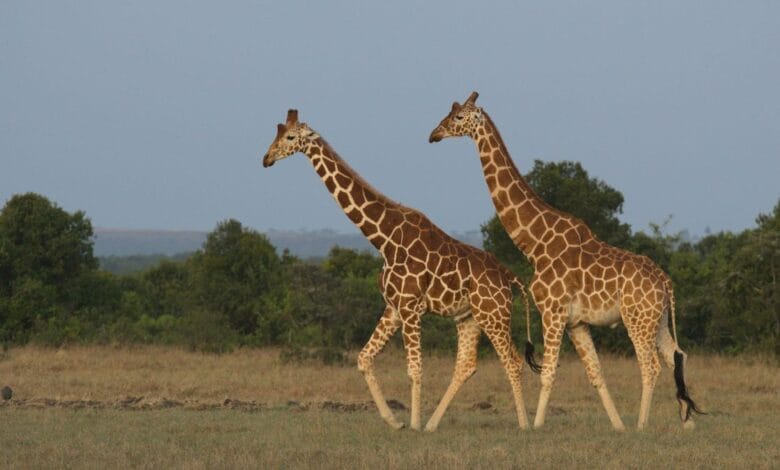
High blood pressure is one of the most common medical conditions worldwide. In humans, long term hypertension increases the risk of heart disease, stroke, kidney failure, and damage to blood vessels. Even moderate elevations in blood pressure can cause harm over time. Yet giraffes live their entire lives with blood pressure levels that would be considered dangerous in humans, without developing the same diseases. This contrast has drawn sustained attention from researchers studying cardiovascular biology. Giraffes are the tallest land mammals. Adult giraffes can reach heights of up to six meters. This height creates a basic physical problem. Blood must be pumped from the heart upward through the neck to supply the brain. Gravity resists this upward flow. To overcome this resistance, giraffes maintain mean arterial pressures close to 200 millimeters of mercury. In humans, pressures at this level would usually cause damage to the heart, blood vessels, and kidneys.
Despite these extreme pressures, giraffes do not show widespread signs of chronic hypertension related disease. Their organs function normally, and they do not commonly develop heart failure, vascular rupture, or kidney injury linked to blood pressure. This difference raises an important question. How do giraffes tolerate pressures that humans cannot? The answer begins with the giraffe’s heart. Relative to body size, the giraffe heart is not unusually large. It scales in a similar way to the hearts of other large mammals. The difference lies in the structure of the heart, especially the left ventricle. The left ventricle is responsible for pumping oxygenated blood into the body.
In giraffes, the walls of the left ventricle are thick. This thickening allows the heart to generate high pressure with each contraction. In humans, similar thickening often develops as a response to chronic hypertension. In those cases, it is usually associated with stiffening of the heart muscle, scarring, and reduced ability to relax between beats. Over time, this can lead to heart failure. In giraffes, ventricular thickening does not lead to these problems. The heart muscle remains functional and does not show the same fibrotic changes seen in human hypertension. Researchers believe this is because the giraffe heart developed under high pressure conditions over evolutionary time. The shape of the ventricle and the arrangement of muscle fibers help distribute stress evenly across the heart wall. This keeps wall stress within a manageable range even when internal pressure is high.
Beyond the heart, the giraffe’s blood vessels show structural features that limit damage from pressure. In humans, high blood pressure often causes leakage of fluid from small blood vessels, especially in the lower limbs. This leads to swelling, known as edema. Giraffes avoid this outcome through specialized adaptations in their legs. The legs of a giraffe are surrounded by dense connective tissue sheaths. These sheaths apply external pressure to the tissues, reducing the tendency of fluid to leave the blood vessels. The effect is similar to compression garments used in medical settings. This structure helps prevent swelling despite high blood pressure and long legs positioned far below the heart.
Some arteries in the giraffe’s limbs also have thickened walls, particularly near joints. These thickened regions may help regulate blood flow and reduce pressure before it reaches smaller vessels. By limiting pressure transmission to fragile areas, these vessels reduce the risk of vascular damage. Kidney function presents another contrast between giraffes and humans. In people, prolonged high blood pressure damages the glomeruli, which are the small filtering units of the kidney. This damage can reduce kidney function and eventually lead to renal failure. Giraffes operate with blood pressures that would normally harm these structures, yet their kidneys remain functional.
Studies suggest that giraffe kidneys are protected by a combination of factors. The pressure within the kidney tissue itself is higher than in humans, which may counterbalance the pressure in incoming blood vessels. In addition, giraffes appear to have relatively low filtration rates. This reduces mechanical stress on the filtering structures and limits long term damage. Postural changes create another challenge. When a giraffe lowers its head to drink water and then raises it again, blood pressure in the brain could change rapidly. In humans, sudden drops in cerebral blood pressure can cause dizziness or fainting. Giraffes manage these changes without losing consciousness.
They do so through coordinated control of blood volume and venous return. Large veins store significant amounts of blood and can release it when needed. Valves within these veins help direct blood flow and prevent sudden drops in pressure. Together, these features help maintain consistent blood flow to the brain during movement. Research has also examined giraffes at the genetic level. Scientists have identified gene variants in giraffes that are linked to cardiovascular development and function. These variants are not present in closely related species that have lower blood pressure. When some giraffe specific gene variants were introduced into laboratory models, the animals showed changes in blood pressure regulation and resistance to pressure related tissue damage.
These findings suggest that the giraffe’s tolerance of high blood pressure is rooted in genetic differences that affect how tissues respond to mechanical stress. These genetic features developed over millions of years as giraffes adapted to increasing height and the associated circulatory demands. However, these observations do not translate directly into treatments for human hypertension. High blood pressure in humans is influenced by diet, physical activity, aging, metabolic health, and complex genetic interactions. Giraffes evolved high blood pressure to meet the demands of their anatomy, not to counteract the same causes that drive hypertension in humans.
As a result, insights from giraffe physiology are primarily mechanistic. They help researchers understand how organs can function under high pressure without injury, but they do not provide immediate therapeutic strategies. Any application to human medicine would require extensive research and controlled clinical studies. This work fits into a broader field known as comparative physiology. Studying how different species solve similar biological problems has previously contributed to medical understanding. Examples include research on hibernating animals and marine mammals. Giraffes add another case by showing how extreme blood pressure can be managed without typical pathology.
Hypertension remains a major contributor to global disease burden. It plays a role in cardiovascular disease, stroke, and kidney failure across populations. While giraffe biology does not change current clinical practice, it broadens the scientific framework for studying blood pressure regulation. The giraffe’s cardiovascular system shows that blood pressure effects depend on anatomy, vessel structure, tissue properties, and genetic programming. Humans lack many of these protective features, which helps explain why similar pressures lead to disease. Studying these differences does not eliminate human vulnerability, but it provides a clearer picture of how blood pressure interacts with the body at multiple levels.
FAQs on Giraffe Heart Physiology
Q: Why do giraffes have such high blood pressure?
A: Giraffes have very high blood pressure because their hearts must pump blood up a long neck to reach the brain. Gravity makes this difficult, so higher arterial pressure is required to maintain adequate blood flow.
Q: What is the normal blood pressure of a giraffe?
A: Giraffes typically have mean arterial pressures close to 200 millimeters of mercury. This level is about twice the normal blood pressure seen in healthy humans.
Q: Why does high blood pressure not harm giraffes?
A: High blood pressure does not harm giraffes because their hearts, blood vessels, and organs are structurally adapted to tolerate it. These adaptations prevent the tissue damage that usually occurs in humans with hypertension.
Q: How is the giraffe heart different from a human heart?
A: The giraffe heart has a very thick left ventricular wall that can generate high pressure without becoming stiff or damaged. In humans, similar thickening often leads to heart disease, but giraffe heart muscle remains functional.
Q: Do giraffes get hypertension related diseases like humans?
A: Giraffes do not commonly develop heart failure, kidney disease, or vascular damage linked to high blood pressure. Their physiology evolved to function safely under sustained high arterial pressure.
Q: How do giraffes prevent swelling in their legs with high blood pressure?
A: Giraffe legs are surrounded by dense connective tissue that limits fluid leakage from blood vessels. This structure helps prevent swelling that would normally occur under high pressure.
Q: How do giraffe kidneys survive extreme blood pressure?
A: Giraffe kidneys appear to be protected by higher internal tissue pressure and lower filtration rates. These features reduce stress on the kidney’s filtering units and help maintain long term function.
Q: Can giraffe heart physiology help treat human hypertension?
A: Giraffe heart physiology provides insights into how tissues tolerate high pressure, but it does not directly translate into treatments. Human hypertension has different causes and would require extensive research before any clinical application.
Q: Why do scientists study giraffes to understand blood pressure?
A: Scientists study giraffes because they naturally live with blood pressure levels that would be harmful to humans. Comparing species helps researchers understand how anatomy, genetics, and tissue structure influence blood pressure tolerance.
External Sources
- Aalkjær C, Wang T. The cardiovascular challenges in giraffes. Journal of muscle research and cell motility. 2023 Jun;44(2):53-60. Doi: 10.1007/s10974-022-09626-0.
- Liu C, Gao J, Cui X, Li Z, Chen L, Yuan Y, Zhang Y, Mei L, Zhao L, Cai D, Hu M. A towering genome: experimentally validated adaptations to high blood pressure and extreme stature in the giraffe. Science Advances. 2021 Mar 17;7(12):eabe9459. Doi: 10.1126/sciadv.abe9459.
- Agaba M, Ishengoma E, Miller WC, McGrath BC, Hudson CN, Bedoya Reina OC, Ratan A, Burhans R, Chikhi R, Medvedev P, Praul CA. Giraffe genome sequence reveals clues to its unique morphology and physiology. Nature communications. 2016 May 17;7(1):11519.
- Damkjær M, Wang T, Brøndum E, Østergaard KH, Baandrup U, Hørlyck A, Hasenkam JM, Smerup M, Funder J, Marcussen N, Danielsen CC. The giraffe kidney tolerates high arterial blood pressure by high renal interstitial pressure and low glomerular filtration rate. Acta physiologica. 2015 Aug;214(4):497-510. Doi: 10.1111/apha.12531.
Disclaimer:
Some aspects of the webpage preparation workflow may be informed or enhanced through the use of artificial intelligence technologies. While every effort is made to ensure accuracy and clarity, readers are encouraged to consult primary sources for verification. External links are provided for convenience, and Honores does not endorse, control, or assume responsibility for their content or for any outcomes resulting from their use. The author declares no conflicts of interest in relation to the external links included. Neither the author nor the website has received any financial support, sponsorship, or external funding. Photo by Nirav Shah from pexels.com