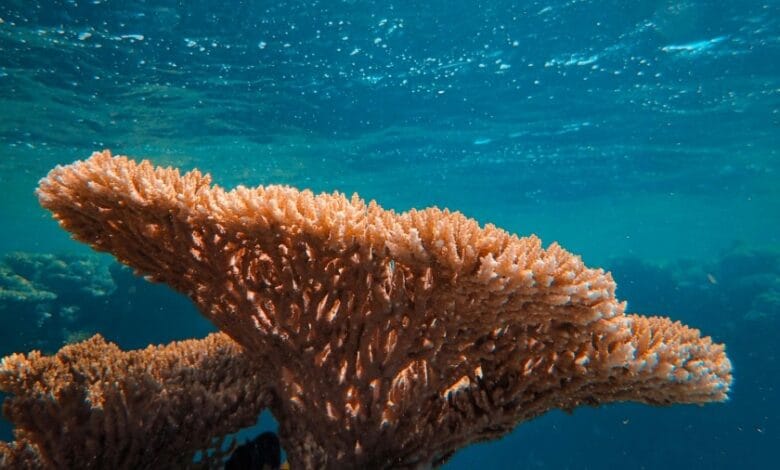
Imagine a kaleidoscope of colors fading to stark white almost overnight. This is not a scene from fiction—it’s the reality facing the world’s coral reefs. Since January 2023, corals across the globe have been experiencing intense coral bleaching, and by March 2025, 84% of reefs were affected, making this the most severe global bleaching event ever recorded.
Corals, often called the “rainforests of the sea,” are more than beautiful underwater landscapes. They are bustling ecosystems supporting one-third of all marine species and providing critical food and protection to around a billion people worldwide. When corals bleach, they expel the tiny algae that give them energy and color. If the heat stress persists, the corals starve, their fragile skeletons crumble, and entire ecosystems can collapse.
This event is a wake-up call. Rising ocean temperatures, frequent marine heatwaves, and human pressures are pushing reefs to the brink. Yet, even amid this crisis, there are glimmers of hope—strategies to protect and restore reefs may still make a difference if global action is swift and coordinated.
What Is Intense Coral Bleaching?
Coral bleaching happens when corals, stressed by unusually warm waters, expel the symbiotic algae called zooxanthellae. These algae are corals’ main source of food through photosynthesis. When expelled, corals turn white—hence the term “bleaching.”
Bleaching is not automatically fatal. Corals can survive short-term stress, but prolonged heat exposure weakens them, making them susceptible to disease and reducing reproductive capacity. In essence, bleached corals are alive but vulnerable, and widespread bleaching is a warning of a fragile ecosystem in crisis.
Bleached corals are like cities stripped of their power grid—the lights are out, and survival is uncertain.
The Scale of the 2023–2025 Event
The ongoing global coral bleaching event, which began in January 2023, has impacted 84% of the world’s coral reefs by March 2025. This fourth global bleaching event has exposed reef systems in 82 countries and territories to extreme heat stress.
To better communicate the severity of such events, scientists have adopted a new five-level bleaching alert system. Level 5 indicates over 80% coral mortality on affected reefs—a stark signal of ecosystems under extreme duress.
Marine heatwaves, driven by climate change, are becoming longer, hotter, and more frequent, leaving corals with little recovery time between events. Reefs that once thrived now struggle to survive, threatening both marine biodiversity and human communities that rely on these habitats.
We are witnessing the slow-motion collapse of coral cities that have flourished for millennia.
Why Coral Reefs Matter
Coral reefs are not just stunning underwater landscapes—they are ecological and economic powerhouses.
- They support roughly one-third of all known marine species, from vibrant fish to crucial invertebrates.
- Reefs provide coastal protection, buffering communities against storms and erosion.
- They sustain fisheries and livelihoods, feeding millions and generating billions in tourism revenue.
The stakes are high. Experts warn that if warming trends continue, the loss of coral ecosystems could profoundly impact global food security, biodiversity, and coastal economies.

Coral reefs are the heartbeat of the ocean; when they falter, the world feels it.
Drivers of Intense Coral Bleaching
Rising Ocean Temperatures
The primary driver is global ocean warming. Heat stress forces corals to expel their symbiotic algae, initiating bleaching. Increasingly frequent marine heatwaves exacerbate the problem, reducing the time reefs have to recover between events.
Human Impacts
- Overfishing disrupts reef food webs.
- Pollution—from plastics to nutrient runoff—weakens coral resilience.
- Coastal development can physically damage reefs and increase sedimentation.
Climate Change
The broader backdrop is climate change, which intensifies heatwaves, ocean acidification, and storms, all compounding coral stress. Limiting warming to 1.5 °C above pre-industrial levels is crucial for coral survival.
Prolonged heat stress leads to:
- Mass Coral Mortality – Skeletons become fragile; entire reef structures can collapse.
- Loss of Biodiversity – Fish, invertebrates, and other organisms lose habitat.
- Economic Impacts – Fisheries collapse, tourism declines, and coastal protection diminishes.
Reef collapse is not just an environmental issue—it’s a human crisis affecting food security, livelihoods, and cultural heritage.
Strategies for Coral Protection and Restoration
Despite the crisis, action is possible:
- Reef Restoration – Coral gardening, transplantation, and assisted evolution strategies.
- Pollution Reduction – Controlling agricultural runoff, plastics, and industrial waste.
- Sustainable Fishing Practices – Protecting keystone species and preventing overfishing.
- Enhancing Coral Resilience – Research into heat-tolerant coral strains and marine protected areas.
Effective action requires global coordination, combining local conservation efforts with ambitious climate mitigation policies.
Conclusion
The 2023–2025 intense coral bleaching event is a stark reminder of how fragile the world’s reefs have become. These underwater ecosystems, vital for marine life and human societies alike, are under unprecedented threat.
Yet, there is hope. With urgent global action to reduce greenhouse gas emissions, restore reef ecosystems, and strengthen resilience against climate stress, it is still possible to protect these natural treasures for future generations.
The story of coral reefs is not yet finished; humanity holds the pen.
References / External Links
- Hughes, T. P., et al. (2018). Global warming transforms coral reef assemblages. Nature, 556, 492–496.
- NOAA Coral Reef Watch:
- IPCC (2022). Climate Change 2022: Impacts, Adaptation, and Vulnerability.
- Cinner, J. E., et al. (2020). Coral reefs and people in a changing world. Nature Sustainability, 3, 947–955.
Disclaimer: This article is intended for informational purposes only. While based on reputable scientific sources, it is not a substitute for professional advice or expert consultation regarding coral reef management, climate action, or marine conservation. Readers are encouraged to verify statistics and seek expert guidance for decision-making.