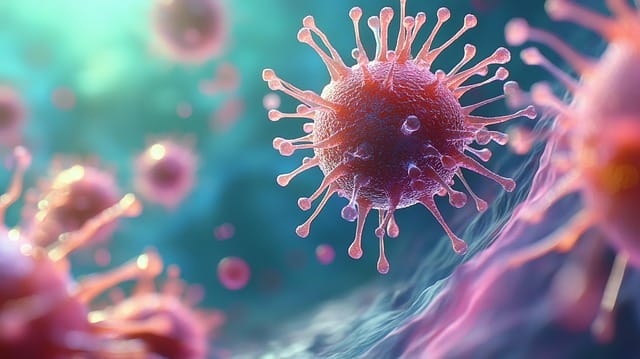
Researchers have discovered a striking feature of bird flu viruses: some strains can survive and replicate at fever-level temperatures in the body — a natural defense that usually hinders human influenza. This heat tolerance, driven by the avian PB1 gene, could accelerate the emergence of hybrid viruses that resist human immune defenses, posing a potential pandemic threat. Understanding this property is crucial for public health strategies and pandemic preparedness worldwide.
The PB1 Gene: Bird Flu’s Heat-Resistant Engine
Bird-origin influenza viruses carry a variant of the PB1 gene, a key element of the viral replication machinery. In laboratory experiments, mice were artificially warmed to fever-like temperatures. Human-origin influenza viruses struggled to replicate under these conditions. In contrast, bird-origin viruses with the avian PB1 gene continued multiplying and causing disease.
The avian PB1 gene allows bird flu viruses to replicate even in fevered hosts, bypassing one of the body’s primary defenses.
The PB1 gene essentially ensures that the virus’s RNA polymerase complex remains functional at elevated temperatures, unlike typical human strains. This gives bird flu a unique advantage, especially if such genes transfer into viruses that already spread efficiently among humans.
Lessons from History
Past influenza pandemics illustrate the danger of gene swapping between bird and human viruses. The 1957 “Asian Flu” and the 1968 “Hong Kong Flu” involved viral strains that had acquired avian PB1 genes. These hybrid viruses caused widespread illness and mortality globally, emphasizing that gene transfer is not just theoretical — it has historical precedent.
Previous pandemics like those in 1957 and 1968 were fueled by avian PB1 genes entering human strains, showing that history may repeat without vigilant surveillance.
Understanding the mechanisms of PB1-driven heat tolerance helps explain why these pandemics were unusually severe and fast-spreading. Researchers caution that ongoing monitoring of avian strains is essential to prevent similar outbreaks.
Implications for Pandemic Preparedness
Bird flu’s ability to withstand fever challenges one of the human body’s most fundamental defenses. Public health authorities must integrate this new understanding into surveillance strategies. Detecting avian viruses with heat-tolerant PB1 genes could allow early warning of potentially dangerous hybrid strains.
Surveillance for PB1-carrying avian viruses could give humanity a crucial head start in preventing the next flu pandemic.
Temperature-based resistance also underscores the need for vaccine and antiviral research that anticipates viral replication at elevated temperatures. Current influenza interventions may need to adapt to this previously underappreciated viral trait.
The Science Behind Heat Resistance
Experimental findings reveal that bird flu viruses maintain active RNA polymerase complexes at elevated temperatures, unlike typical human strains. This functional persistence allows viral RNA synthesis and protein production even under fever conditions.
Mice studies demonstrated that viruses carrying the avian PB1 gene caused significant disease at temperatures that halted replication of human-origin influenza. This provides a mechanistic explanation for heat tolerance and suggests potential pathways for hybridization with human-adapted strains.


The virus’s replication machinery remains unharmed by fever, enabling infection even when the body’s defenses are active.
Monitoring and Early Detection
Because influenza viruses readily swap genes, scientists stress the importance of proactive monitoring of avian populations. Key strategies include:
- Sequencing viral genomes in wild and domestic birds
- Identifying PB1 gene variants linked to heat tolerance
- Tracking mutations that could enhance human transmissibility
International collaboration is critical. Sharing genetic data across borders ensures that emerging heat-resistant strains are detected before they have the opportunity to cause human outbreaks.
Human Impact and Societal Relevance
While direct transmission of bird flu to humans remains limited, the potential for hybrid strains poses a serious threat. Heat-tolerant influenza could lead to more severe infections, prolonged illness, and higher hospitalization rates. Public health planning must consider:
- Strain-specific vaccines
- Early antiviral administration strategies
- Rapid response protocols for suspected hybrid outbreaks
Heat-tolerant bird flu strains could make future influenza infections harder to control and more severe, reinforcing the need for robust pandemic strategies.
Researchers emphasize that current findings are based on laboratory and mouse model experiments. While these results highlight risk, they do not guarantee that a heat-tolerant hybrid virus will emerge in humans imminently. The transfer of PB1 genes and subsequent adaptation to human hosts involves multiple complex steps.
Understanding PB1-mediated heat resistance opens avenues for research:
- Exploring antiviral drugs targeting heat-tolerant polymerases
- Engineering vaccines accounting for temperature resilience
- Enhancing predictive models for pandemic risk based on viral genetics
Continued investigation is crucial to anticipate and mitigate potential human infections before a hybrid strain spreads widely.
External References / Sources
- Cambridge University Press. Influenza virus gene function and replication dynamics. https://www.cambridge.org/research/flu-gene
- CDC. Influenza: Past pandemics. https://www.cdc.gov/flu/pandemic-history
- WHO. Avian influenza surveillance guidelines. https://www.who.int/avian-influenza/surveillance
Disclaimer: Some content on this page may have been created or reviewed with the help of artificial intelligence tools. While every effort is made to ensure reliability, readers are advised to consult primary sources. External links and references are offered for convenience, and Honores is not liable for their content or impact.