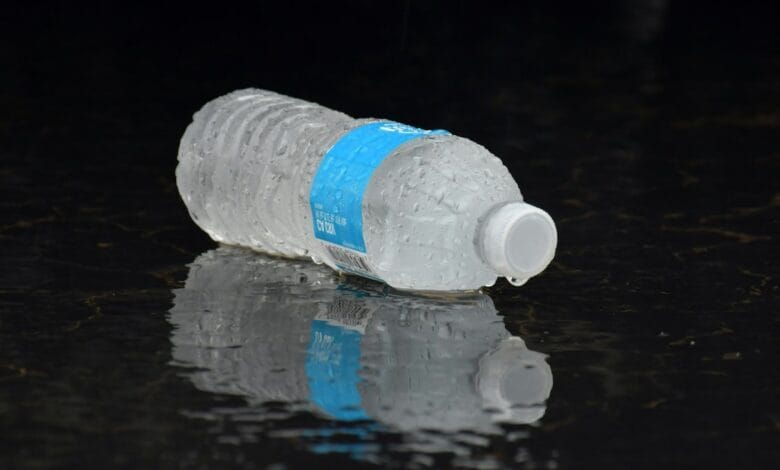
From morning to night, bottled water fits into common routines. A traveler buys it at an airport before boarding a flight. A parent packs it in a child’s school bag. Someone at the gym reaches for a chilled bottle after a workout. In each case, the choice is simple and based on trust. Bottled water is often seen as cleaner, safer, and more reliable than treated tap water. That belief has shaped buying habits for years. But a recent scientific study challenges that assumption with measured data. A team of researchers recently compared bottled water and treated tap water to measure microplastics and nanoplastics. Many people assume bottled water is cleaner. This study tested that idea by measuring plastic particles in both sources using the same laboratory methods.
Scientists collected samples from four drinking water treatment plants and six bottled water brands. They analyzed every sample using one standardized process. This was important because earlier studies used different tools, which made results hard to compare. By using the same testing system for all samples, the researchers reduced measurement differences. The team used optical photothermal infrared spectroscopy and scanning electron microscopy. These tools can detect plastic particles as small as 300 nanometers. Older studies often missed particles this small because traditional methods focused on larger fragments. In this study, more than half of the detected particles were in the nanoplastic range. That means earlier research may have counted fewer particles simply because the instruments (used) could not see them.
The results showed that several bottled water samples contained higher numbers of microplastics and nanoplastics than treated tap water. The difference was most noticeable in the smallest particle sizes. Common plastics found in bottled water included polyamide, polyethylene terephthalate, and polyethylene. These materials are often used in packaging and containers. Tap water also contained similar types of plastics, but generally at lower particle counts. Rubber particles appeared in both bottled and tap water. This suggests that rubber materials may contribute to environmental plastic exposure. While particle numbers were higher in many bottled water samples, the total mass of plastic did not show a statistically significant difference between bottled and treated tap water. In other words, bottled water often had more tiny particles, but not necessarily more plastic by total weight.
These findings matter because they show how improved technology changes what scientists can measure. When detection tools become more sensitive, reported particle counts increase. This does not automatically mean contamination is getting worse. It may mean researchers can now detect particles that were previously invisible. However, counting particles is not the same as proving health harm. Scientists still do not have clear evidence linking typical drinking water exposure to specific diseases. Laboratory research shows that smaller particles may have a greater ability to cross cell barriers compared to larger particles. But the exact dose required to cause harm in humans is not clearly defined.
Most exposure likely happens through ingestion. People drink water every day, so even small particle levels can lead to repeated exposure. Still, there are no widely accepted thresholds that define a safe or unsafe number of microplastics or nanoplastics in drinking water. This makes it difficult to translate particle counts into clear health guidance. Microplastics have been found in many water sources around the world even in the Arctic. Reports supported by organizations such as the National Institutes of Health have documented plastic particles in bottled water across multiple countries. This shows that contamination is not limited to one brand or one region. Plastic particles can enter water through packaging, manufacturing equipment, environmental pollution, or even airborne dust during bottling or treatment, reflecting the broader rise in plastic production and its growing health impact.
Municipal water systems usually rely on several treatment steps. These may include filtration and disinfection. Larger plastic fragments can be removed during filtration, but very small particles may pass through. Bottled water production involves different processes. Plastic bottles can shed tiny particles through friction, pressure, or temperature changes during transport and storage. These factors may help explain why some bottled samples showed higher particle counts. Even so, not every bottled water brand showed the same levels. Variation existed among brands and treatment plants. This means no single source can be labeled as consistently lower in microplastics based on this study alone. The research sample was limited in size and location. Contamination levels may also change over time.
Regulation adds another layer of complexity. Most drinking water standards focus on bacteria, viruses, heavy metals, and chemical pollutants. Microplastics and nanoplastics are not yet included in many official safety limits. Because there are no standardized thresholds, discussions often compare relative levels instead of absolute safety benchmarks. Global organizations such as the World Health Organization continue to evaluate evidence on drinking water quality. Environmental groups like the United Nations Environment Programme track plastic pollution at a broad level. However, direct links between everyday microplastic exposure from water and long term health outcomes are still under investigation.
The study does have limitations. The number of water sources tested was relatively small. Geographic coverage was limited. The research captured a specific time period rather than long term trends. Analytical methods continue to evolve, which means future studies may detect even smaller particles or identify plastic types with greater precision. Despite these limits, the study provides a clear comparison using the same measurement tools across bottled and municipal water samples. It shows that some bottled water samples contained higher counts of microplastics and nanoplastics than treated tap water under the conditions tested. It also shows that improved detection technology increases reported particle counts, especially in the nanoplastic range.
The key point is that exposure does not automatically mean harm. Scientists are still working to define how particle size, concentration, and duration of exposure relate to health effects. Until dose response relationships are better understood, particle counts alone cannot determine clinical risk. As measurement tools improve, reported levels of microplastics may continue to rise because scientists are detecting smaller particles. Policymakers and health researchers will need to combine environmental monitoring with toxicology and long term human data to set evidence based guidelines.
For now, the comparison between bottled water and municipal tap water highlights the presence of microplastics in both sources. It also shows that assumptions about bottled water purity should be evaluated using standardized testing rather than perception alone.
FAQs on Microplastics in Bottled Water
Q: What are microplastics and what are their health effects?
A: Microplastics are tiny plastic particles smaller than five millimeters that form when larger plastic items break down or are manufactured at small sizes. Research suggests very small particles may cause inflammation or interact with cells, but clear evidence linking normal exposure levels to specific human diseases is still being investigated.
Q: Does bottled water contain more microplastics than treated tap water?
A: Some recent research found that certain bottled water samples had higher numbers of microplastics and nanoplastics compared to treated tap water. The difference was mostly in very small particles. However, results varied by brand and location, so it does not mean all bottled water always contains more microplastics than tap water.
Q: Are microplastics in drinking water harmful to human health?
A: Scientists are still studying the health effects of microplastics in drinking water. Laboratory studies show that very small particles may interact with cells, but there is no clear evidence linking typical drinking water exposure to specific diseases. At this time, particle counts alone do not confirm health risk.
Q: How do microplastics get into bottled water?
A: Microplastics can enter bottled water through packaging materials such as plastic bottles and caps. Friction during manufacturing, transportation, and storage may release tiny plastic fragments. Environmental contamination and airborne particles during the bottling process can also contribute.

Q: What are nanoplastics and why they should be considered?
A: Nanoplastics are plastic particles smaller than one micrometer. Because of their small size, they may have a greater ability to pass through biological barriers compared to larger fragments. Research is ongoing to understand how these particles behave inside the human body.
Q: Is treated tap water safer than bottled water when it comes to microplastics?
A: Safety depends on multiple factors, including local treatment systems and bottling practices. Some studies show lower particle counts in treated tap water, while others show variability between sources. There is no universal answer that applies to all locations.
Q: Can water filters remove microplastics from drinking water?
A: Certain filtration systems may reduce larger microplastic particles, especially those designed for fine particulate removal. However, very small nanoplastics can be more difficult to filter out. Effectiveness depends on the filter type and pore size.
Q: Are there official safety limits for microplastics in drinking water?
A: Most drinking water regulations focus on bacteria, heavy metals, and chemical pollutants. Standardized global safety limits for microplastics and nanoplastics have not yet been established. Regulatory agencies are still reviewing scientific evidence.
Q: Why are recent studies detecting more microplastics than older research?
A: Newer analytical tools can detect much smaller particles than older methods. Earlier studies often missed nanoplastics because of technical limitations. As detection technology improves, reported particle counts tend to increase.
Q: How common are microplastics in drinking water worldwide?
A: Microplastics have been detected in bottled and tap water in many countries. Studies suggest that plastic particles are widespread due to global plastic production and environmental contamination. Their presence is not limited to one brand or region.
Q: Should people stop drinking bottled water because of microplastics?
A: Current evidence does not provide clear guidance to completely avoid bottled water based solely on microplastic counts. Health impacts from typical exposure levels remain uncertain. Decisions about water sources should consider local water quality, safety standards, and personal needs.
External Sources:
- Hart MN, Lenhart JJ. What’s in your water? A comparative analysis of micro-and nanoplastics in treated drinking water and bottled water. Science of The Total Environment. 2026 Jan 10;1011:181148. Doi: 10.1016/j.scitotenv.2025.181148.
- The Ohio State University. Some bottled water worse than tap for microplastics, study shows. Ohio State News; Feb 02, 2026. Available at: https://news.osu.edu/some-bottled-water-worse-than-tap-for-microplastics-study-shows/
- National Institutes of Health. Plastic particles in bottled water. News & Events; NIH Research Matters. January 23, 2024. Available at: https://www.nih.gov/news-events/nih-research-matters/plastic-particles-bottled-water
- United Nations Environment Programme (UNEP). Plastic Pollution. Available at: https://www.unep.org/plastic-pollution
Disclaimer:
Some aspects of the webpage preparation workflow may be informed or enhanced through the use of artificial intelligence technologies. While every effort is made to ensure accuracy and clarity, readers are encouraged to consult primary sources for verification. External links are provided for convenience, and Honores does not endorse, control, or assume responsibility for their content or for any outcomes resulting from their use. The author declares no conflicts of interest in relation to the external links included. Neither the author nor the website has received any financial support, sponsorship, or external funding. Photo by Serenity Mitchell on Unsplash.