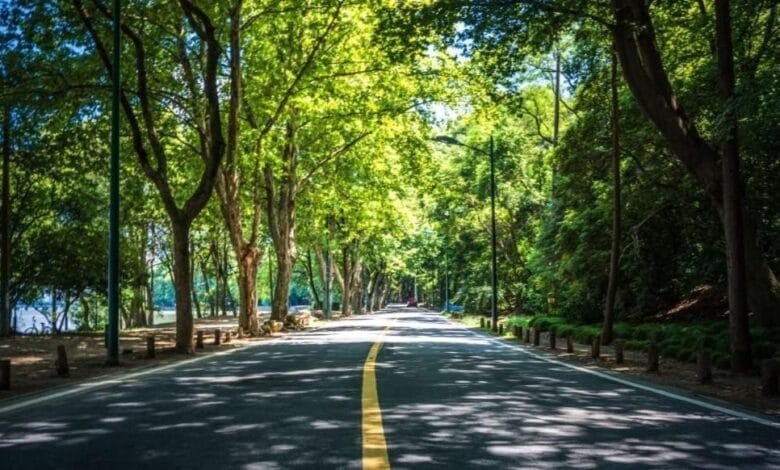
Do you know, your neighborhood trees might just save your heart. A recent study suggests more visible trees from street level mean 4% less cardiovascular disease. While a 4% reduction in CVD risk may seem modest, it’s a vital gain amid surging cardiac cases worldwide. In 2023, CVD claimed over 900,000 U.S. lives, that’s one in three deaths. Even small preventive steps, like tree canopy boosts can yield population-level impact. Something is indeed better than nothing.
Researchers analyzed over 350 million street-view images across U.S. cities, measuring tree canopy, grass, shrubs precisely. They matched that to 18 years of medical records and death certs for CVD such as heart failure, strokes, the other works. Now here’s something interesting: trees lowered cardio vascular incidence; and surprisingly, the greenery of the grass didn’t help, sometimes affected negatively.
Think about it. Cardiovascular diseases cause ~19.8 million deaths globally each year as per WHO. In urban heat islands, trees cool air, filter pollution, cut stress; these are the pathways to healthier hearts. On the other side, Grass lawns; mowed often, less shade, maybe more allergens. You’d never guess grass could backfire. Prior studies hinted at green space perks, but this nails trees specifically.
City Councils & governing bodies pour cash into parks, but findings suggest to protect mature trees over grass planting. In other facts, biodiversity counts too. Diverse street trees tied to even lower heart mortality in past work. But does every block need a forest? Let’s dive into their smart methods; AI-powered image analysis meets epi stats. It’s science meeting sidewalks.
Study Methods
Teams from UC Davis and collaborators grabbed 350 million Google Street View images from urban zip codes. Using AI pixel analysis, researchers mapped trees, grass, shrubs, and buildings as seen from the street. They captured ground-level reality instead of blurred satellite views. They linked greenery metrics to 18-year health data: electronic records, death certificates for CVD incidence across thousands. Stats adjusted for age, income, smoking, the usual confounders via multilevel models.
Powered by cutting-edge deep learning, the system learned from labeled images and reached accuracy above 90%. Sensitivity checks swapped greenery types, scales. Past studies used zip-level forest diversity via Shannon Index, tied to mortality rates 2010-2018, used census and vital statistics data. This study advances the field with a longitudinal design capturing incident, not just prevalent, cases. Policy simulations suggest tree-focused planting delivers greater health gains than grass alone, with results robust to urban density adjustments. Unlike coarse NDVI greenness metrics, the analysis uses granular, human-scale exposure, rigorous pixel-to-patient matching rather than broad ecological proxies.
Key Findings
Higher street tree coverage linked to 4% drop in CVD incidence, at the same time, grass-heavy views linked to 6% rise; and the Shrubs/other greens contributed 3% uptick. Trees uniquely protective across cities. Diverse urban forests cut heart disease mortality 13%, stroke 16% per standard deviation Shannon boost. Tree loss from pests hiked CVD before. Total green space helps diabetes, but trees rule CVD. But does grass really harm? Findings say yes, via exposure contrasts.
Implications
Prioritizing urban tree canopies, especially in hotter, underserved neighborhoods could deliver substantial public-health gains and advance environmental equity. Expanded tree cover may reduce cardiovascular burden, improve air quality, lower heat stress, and encourage physical activity, potentially easing long-term healthcare costs. Compared with turf-focused greening, investments in urban forestry may yield stronger cardiovascular returns. For planners and developers, preserving mature trees and expanding diverse canopy cover represents a scalable, climate-resilient strategy; particularly valuable in rapidly urbanizing regions facing overlapping heat and heart-health risks.
Limitations and Future Research
Findings are largely cross-sectional and cannot establish causation; residual confounding such as physical activity or pollution exposure may remain in the play. Street-view imagery may miss private green spaces, and AI segmentation, though validated, carries potential error. Results apply primarily to urban settings. Lifetime exposure effects remain unclear, and future trends beyond current data require confirmation.
Future researches should prioritize longitudinal tree-planting trials measuring pre- and post-cardiovascular outcomes. Natural experiments such as pest outbreaks or storm-driven canopy loss can strengthen causal inference. Mechanistic studies should track stress and inflammatory biomarkers by greenery type. Replication across European and Asian cities is also essential. Full cost-benefit models, including mortality valuation, are needed. However, the key questions remain: biodiversity versus canopy density effects, interactions with heat waves, and evidence thresholds required for clinical “green prescriptions.”
Frequently Asked Questions
Q: Do urban trees reduce cardiovascular disease?
A: Yes, higher street-visible trees link to 4% lower CVD incidence per new study. They cool, clean air unlike other green. Protects hearts city-wide. Population-level exposure means even modest risk reductions can translate into meaningful public-health gains across millions of urban residents.
Q: Why is grass linked to more heart disease?
A: Areas with more visible grass show 6% higher CVD, possibly less shade, more mowing allergens. Trees outperform clearly. Researchers caution this is an association, and grass may also reflect hotter, low-canopy neighborhoods with fewer cooling and air-filtering benefits.
Q: How was greenery measured in the study?
A: AI analyzed 350M street views for tree/grass/shrub pixels at eye level, tied to 18-year health records. Precise urban reality. This street-level pixel segmentation captures human-scale exposure more accurately than coarse satellite greenness indices.
Q: What types of CVD does this cover?
A: The analysis tracks incident diagnoses across major cardiovascular categories including Heart failure, arrhythmias, strokes, vessel clots, reflecting both acute and chronic disease burden in urban populations.
Q: Is tree diversity important too?
A: Absolutely, diverse street trees drop heart mortality 13%, stroke 16% via Shannon Index. More species, bigger benefits. Ecological diversity may enhance resilience, improve air-pollutant capture, and provide broader microclimate and psychological benefits linked to cardiovascular health.
Q: Should cities plant more trees than grass?
A: Yes, policies protecting mature trees yield better heart health than grass investments. Cost-effective public health. When heat surges, trees that cast shade protect hearts more than grass that just looks green.
Q: Does this apply only to US cities?
A: Study focused urban US, but global high-income parallels suggest yes. Rural, developing needs testing. Differences in climate, urban form, healthcare access, and baseline vegetation mean results yet to be validated across diverse international and low-resource settings.
Q: How do trees help heart health?
A: Shade reduces heat stress, pollution filters lower inflammation, beauty cuts anxiety, these all are CVD pathways. Trees may also encourage walking and outdoor activity, indirectly improving cardiovascular fitness and metabolic health.
Q: Any prior studies on green space and CVD?
A: Systematic reviews and cohort studies link greenness to lower CVD, but trees specifically outperform grass/shrubs here. Shown modest but significant reductions in cardiovascular mortality and morbidity with higher urban greenness exposure..
Q: What’s the policy takeaway?
A: Urban forestry; preserve/plant trees for lives saved, equity in vulnerable areas. Targeted canopy expansion in heat-prone, low-income neighborhoods can deliver scalable public-health returns while strengthening climate resilience.
External Sources
- UC Davis Health. Trees — not grass and other greenery — associated with lower heart disease risk in cities. UC Davis Health [Internet]. 2026 Jan 21. Available from: https://health.ucdavis.edu/news/headlines/trees–not-grass-and-other-greenery–associated-with-lower-heart-disease-risk-in-cities/2026/01
- Giacinto JJ, Fricker GA, Ritter M, Yost J, Doremus J. Urban forest biodiversity and cardiovascular disease: Potential health benefits from California’s street trees. PLoS One. 2021 Nov 3;16(11):e0254973.
- Astell-Burt T, Feng X. Urban green space, tree canopy, and prevention of heart disease, hypertension, and diabetes: A longitudinal study. The Lancet Planetary Health. 2019 Sep 1;3:S16.
Disclaimer:
Some aspects of the webpage preparation workflow may be informed or enhanced through the use of artificial intelligence technologies. While every effort is made to ensure accuracy and clarity, readers are encouraged to consult primary sources for verification. External links are provided for convenience, and Honores is not responsible for their content or any consequences arising from their use. The author declares no conflicts of interest in relation to the external links included. Image by evening_tao on Freepik.