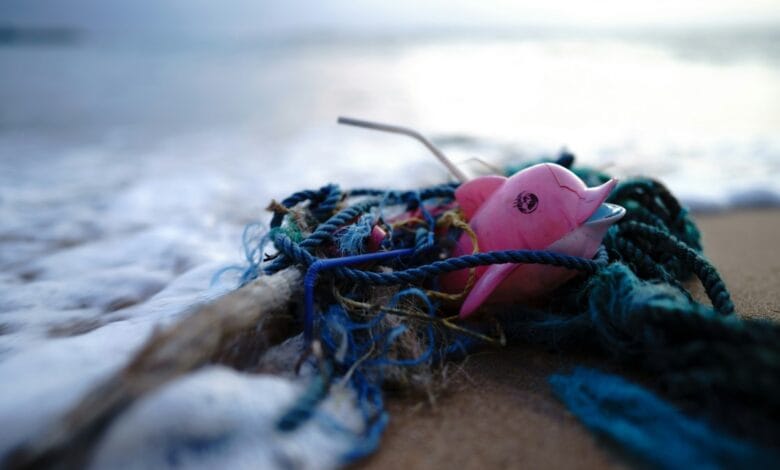
The ocean, covering more than 70% of the Earth’s surface, is often called the planet’s life-support system. It regulates climate, provides food for billions of people, and is home to countless species of marine life. Yet, despite its vastness, the ocean is increasingly suffering from pollution caused by human activities. Every year, millions of tons of plastic & electronic waste, toxic chemicals, oil spills, and untreated sewage enter marine environments, threatening fragile ecosystems and endangering wildlife. Addressing marine pollution has become one of the most urgent environmental challenges of our time, requiring awareness, responsibility, and collective action to protect the health of our oceans.
Scientists have detected chemicals used in LCD screens inside the bodies of endangered dolphins and porpoises. A recently published study, reports that some of these chemicals were present in brain tissue. The findings suggest that pollutants linked to electronic waste can reach marine mammals. These chemicals are called liquid crystal monomers. They are used in LCD screens found in televisions, laptops, tablets, and smartphones. Laboratory tests conducted in the study showed changes in cellular pathways related to DNA repair and cell division. The research does not report disease in the animals but documents the presence of these compounds in their tissues.
How Screen Chemicals Enter the Ocean
Liquid crystal displays control how light passes through a screen to form images. Manufacturers use liquid crystal monomers to align the liquid crystal materials inside the display. These compounds can persist after devices are discarded. Electronic waste has increased over the past two decades as televisions, phones, and computers are replaced more often. When discarded electronics break apart in landfills or informal recycling areas, chemicals from their components can be released. Rainwater, wastewater discharge, and urban runoff can carry these substances into rivers and coastal waters.
Researchers suggest that marine mammals are exposed mainly through diet. Previous studies have detected liquid crystal monomers in fish, shellfish, and other marine organisms. When predators consume contaminated prey, pollutant concentrations can increase at higher levels of the food chain. This process is called biomagnification.
Scientists Detect LCD Chemicals in Dolphin Brains
The study examined two marine species living in the northern South China Sea: the Indo Pacific humpback dolphin and the Indo Pacific finless porpoise. Tissue samples were collected from animals between 2007 and 2021. Researchers analyzed blubber, muscle, liver, kidney, and brain tissue. Of the 62 liquid crystal monomers screened, 38 were detected in at least one sample. Blubber contained the highest concentrations because fatty tissue often stores chemical compounds.
Measurable levels were also found in muscle and brain tissue. The presence of liquid crystal monomers in the brain is notable because the blood brain barrier normally limits the movement of many substances from the bloodstream into neural tissue. Detection in brain tissue indicates that some of these chemicals can pass this barrier. Average concentrations differed between the species. In humpback dolphins, the mean total concentration across tissues was about 53.6 nanograms per gram of dry mass. In finless porpoises, the average was about 32.7 nanograms per gram. Brain tissue concentrations were lower than those measured in blubber but remained detectable.
What Laboratory Tests Reveal About Possible Effects
Researchers also conducted laboratory experiments to examine possible biological effects. The tests used cultured cells derived from a melon headed whale. Several liquid crystal monomers detected in tissue samples were examined. The experiments showed changes in gene activity related to cell division and DNA repair pathways. Some compounds reduced cell viability at higher concentrations. DNA repair systems normally correct damage that occurs to genetic material during routine cellular processes. Disruption of these pathways may allow damaged DNA to persist in cells. The laboratory experiments were conducted in cell cultures rather than in living animals, so the results cannot determine health effects in wild marine mammals.
Why Marine Mammals Reveal Emerging Pollution
Marine mammals are often used to monitor environmental contamination. Dolphins and porpoises live for many years and feed on fish and other marine organisms. Pollutants that move through marine food webs can accumulate in these animals. The study area near the Pearl River Estuary in the northern South China Sea contains large industrial and urban regions. The area also includes electronics manufacturing and recycling activities. Environmental monitoring in this region has previously detected pollutants such as polychlorinated biphenyls and brominated flame retardants.
Liquid crystal monomers represent a newer category of chemicals associated with electronic devices. The concentrations measured in this study were lower than levels historically reported for legacy contaminants such as DDT or PCBs in marine mammals. Electronic waste continues to increase as large numbers of devices are discarded each year. Environmental monitoring studies often begin by identifying new chemicals in wildlife. Detecting compounds in marine mammals provides information about pollutants circulating within marine ecosystems.
FAQs on LCD Screen Chemicals Found in Dolphin Brains
Q: What are liquid crystal monomers used in LCD screens?
A: Liquid crystal monomers are specialized chemical compounds used in liquid crystal displays found in televisions, laptops, tablets, and smartphones. These molecules help align liquid crystal materials so screens can control light and display images clearly. Their chemical stability allows screens to function reliably but may also cause the compounds to persist in the environment after devices are discarded.
Q: How did LCD screen chemicals end up in dolphins and porpoises?
A: Researchers believe these chemicals enter marine ecosystems through electronic waste. When discarded electronics break apart in landfills or recycling sites, chemical components can be released and carried by water into rivers and coastal areas. Small marine organisms may absorb the chemicals, and predators such as dolphins consume contaminated prey through the food chain.
Q: Why is finding LCD chemicals in dolphin brain tissue important?
A: Brain tissue is normally protected by the blood brain barrier, which limits many foreign substances from entering the central nervous system. Detecting liquid crystal monomers in the brain suggests that some of these compounds can cross this protective barrier. This raises scientific questions about how such pollutants may interact with sensitive neural tissues.
Q: What is biomagnification and how does it affect dolphins?
A: Biomagnification is a process where pollutant concentrations increase at higher levels of the food chain. Small organisms absorb contaminants from the environment, and larger predators eat many of these organisms. Over time animals like dolphins and porpoises can accumulate higher amounts of pollutants in their bodies because they consume large quantities of prey.
Q: Which marine species were examined in the LCD chemical pollution study?
A: The study examined Indo Pacific humpback dolphins and Indo Pacific finless porpoises living in the northern South China Sea. Scientists analyzed tissue samples from animals collected between 2007 and 2021. These species are considered useful indicators of environmental pollution because they live long lives and occupy high positions in the marine food web.
Q: Can chemicals from electronic waste damage animal cells?
A: Laboratory experiments conducted in the study showed that some liquid crystal monomers can alter gene activity related to cell division and DNA repair pathways. DNA repair mechanisms help maintain the stability of genetic material inside cells. While these findings suggest possible cellular stress, the experiments were performed in cultured cells rather than in living animals.
Q: Are liquid crystal monomers considered a major marine pollutant today?
A: The study describes these chemicals as emerging pollutants rather than dominant contaminants. The concentrations measured in marine mammals were lower than those historically reported for older pollutants such as DDT or PCBs. However researchers monitor these compounds because electronic waste production continues to increase worldwide.
Q: How does electronic waste contribute to ocean pollution?
A: Electronic waste contains many chemical components used in screens, circuits, and protective materials. When devices are discarded, these substances can be released during disposal, recycling, or environmental weathering. Runoff and wastewater can transport the chemicals into aquatic ecosystems where they may accumulate in sediments and living organisms.
Q: Could LCD screen chemicals in seafood affect human exposure?
A: The study notes that marine mammals are exposed mainly through their diet of fish and other marine organisms. Because humans also consume seafood, researchers are interested in examining whether these chemicals appear in marine food webs consumed by people. At present, data on human exposure to liquid crystal monomers remain limited.
Q: Why do scientists often study dolphins to detect new environmental pollutants?
A: Dolphins and other marine mammals serve as indicators of ecosystem health because they live for many years and feed at the top of the marine food chain. Pollutants that circulate through ocean ecosystems can gradually accumulate in their bodies. When scientists detect new chemicals in these animals, it often signals that the compounds are present across the wider marine environment.
External Sources:
- Tao D, Li C, Sun Y, Ruan Y, Jin Q, Sun J, Lu Y, Kot BC, Lam PK, Wu F, He J. Liquid Crystal Monomers Released from LCD Displays Accumulate in Endangered Marine Cetaceans Triggering Health Concerns. Environmental Science & Technology. 2026 Feb 25. Doi: 10.1021/acs.est.5c17767.
- Wang Y, Jin Q, Lin H, Xu X, Leung KM, Kannan K, He Y. A review of liquid crystal monomers (LCMs) as emerging contaminants: Environmental occurrences, emissions, exposure routes and toxicity. Journal of Hazardous Materials. 2024 Dec 5;480:135894. Doi: 10.1016/j.jhazmat.2024.135894.
Disclaimer:
Some aspects of the webpage preparation workflow may be informed or enhanced through the use of artificial intelligence technologies. While every effort is made to ensure accuracy and clarity, readers are encouraged to consult primary sources for verification. External links are provided for convenience, and Honores does not endorse, control, or assume responsibility for their content or for any outcomes resulting from their use. The author declares no conflicts of interest in relation to the external links included. Neither the author nor the website has received any financial support, sponsorship, or external funding. Photo by Sören Funk on Unsplash.