Depression is a mental health condition that causes long lasting feelings of sadness, low energy, and loss of interest in daily life. Many people take antidepressants, attend therapy, and still struggle to get through daily life. Depression can be hard especially when the usual treatments do not work. This ongoing struggle affects not just mood, but also sleep, focus, relationships, and hope for recovery. As more people face depression that does not improve with standard care, the need to understand why treatments fail and to explore new supportive approaches has become a growing and urgent challenge. Scientists have been searching for new ways to help people whose depression does not improve with regular medicines. This type of condition is called treatment resistant depression. Recently, researchers decided to look at something very familiar to everyone: food.
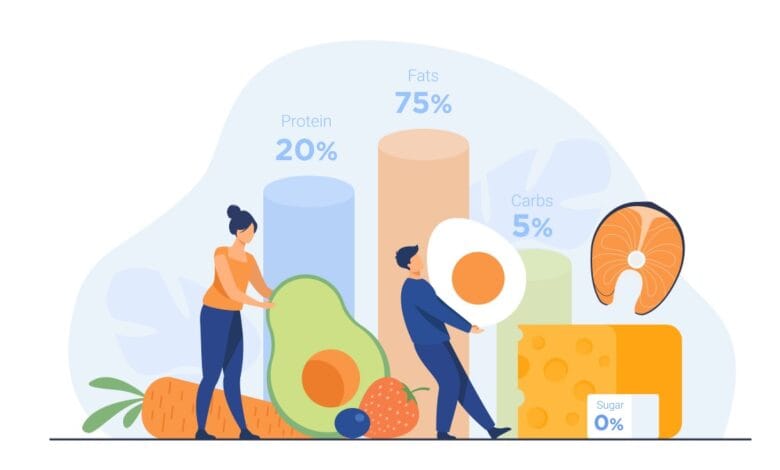
A clinical trial published in JAMA Psychiatry explored whether a ketogenic diet could help reduce depression symptoms. A ketogenic diet is very low in carbohydrates and high in fats. It is often used for weight loss or epilepsy, but its role in mental health is still being studied. The study included 88 adults from the United Kingdom who had depression that did not improve even after trying at least two antidepressant medications. These participants were divided into two groups. One group followed a ketogenic diet, while the other followed a plant based control diet that encouraged fruits, vegetables, and healthy fats.
For six weeks, both groups received strong support. People on the ketogenic diet ate less than thirty grams of carbohydrates per day. They were given prepared meals, tested their ketone levels, and met weekly with diet counselors. The control group received food vouchers, nutrition advice, and guidance on eating healthier foods, but without strict limits on carbohydrates. To understand how the diets affected mood, researchers used a standard questionnaire called the PHQ-9. This tool measures how severe a person’s depression symptoms are. Scores were recorded at the start of the study, after six weeks, and again at twelve weeks. Researchers also checked anxiety, thinking ability, pleasure in daily life, and overall quality of life.
After six weeks, both groups felt noticeably better. People on the ketogenic diet saw their depression scores drop by an average of 10.5 points. The control group improved by 8.3 points. The difference between the two groups was small, about two points, and was just barely considered statistically meaningful. By twelve weeks, the difference between the two diets disappeared. Both groups had similar depression scores, and no clear advantages were seen for anxiety, brain function, or quality of life. Importantly, no serious health problems were reported in either group during the study.
The results suggest that a ketogenic diet may help reduce depression symptoms slightly in the short term when compared with a healthy plant based diet. However, the improvement was modest and did not last once the study period ended. Researchers also noted that the size of the improvement was smaller than what many experts consider a meaningful clinical change. One interesting finding was that ketone levels did not clearly match how much people’s mood improved. This means ketosis alone may not explain the changes in depression. Scientists have suggested possible reasons such as reduced inflammation, changes in brain energy use, or effects on brain chemicals, but these ideas are not yet proven in human studies.
This trial was stronger than many earlier studies because it included a control group and provided structured support. Still, challenges remain. Many participants found the strict diet hard to maintain once the intensive support stopped, raising concerns about how realistic this approach is in everyday life. When researchers look at all studies together, reviews suggest ketogenic diets may lead to small or moderate improvements in depression. However, results vary widely between studies, making firm conclusions difficult.
Current depression treatment guidelines continue to focus on therapy, medication, exercise, and healthy sleep habits. Diet is viewed as a helpful support, not a main treatment. Strict diets like keto are not officially recommended for depression at this time. For now, the findings point to the need for larger and longer studies. Scientists want to know whether certain people with severe or long lasting depression might benefit more than others. Until then, experts advise caution and emphasize that any major diet changes should be done with professional guidance rather than on one’s own.
FAQs on Keto Diet for Depression Treatment
Q: Can a ketogenic diet help with depression?
A: Research suggests that a ketogenic diet may slightly reduce depression symptoms , but only for the short term, especially when combined with structured dietary support. In a randomized clinical trial reported in JAMA Psychiatry, improvements were modest and did not last beyond twelve weeks.
Q: What is treatment resistant depression?
A: Treatment resistant depression refers to depression that does not improve after trying at least two different antidepressant medications. People with this condition often continue to experience symptoms despite standard treatments.
Q: How does the keto diet affect mental health?
A: The ketogenic diet changes how the body produces energy by using fats instead of carbohydrates. Scientists believe this shift may influence brain energy use, inflammation, and chemical signaling. However, these effects are still being studied and are not yet fully understood in humans.
Q: Is the keto diet better than a plant based diet for depression?
A: In the clinical trial, both the ketogenic diet and a healthy plant based diet improved depression symptoms. The keto group showed a slightly greater improvement at six weeks, but the difference was small and disappeared by twelve weeks. This suggests neither diet clearly outperformed the other in the long term.
Q: How long does it take for a ketogenic diet to affect depression?
A: In the study, changes in depression scores were measured after six weeks. Improvements were seen during this short period, but they were not maintained at twelve weeks. This raises questions about whether the effects can last without ongoing support.
Q: Does ketosis itself improve mood?
A: The study found no clear link between ketone levels and improvements in depression symptoms. This suggests that ketosis alone may not explain mood changes. Other biological or lifestyle factors may also play a role.
Q: Are there risks to using a ketogenic diet for depression?
A: A ketogenic diet involves strict carbohydrate restriction, which many people find difficult to maintain. It may also lead to nutrient gaps or digestive issues if not properly planned. Medical and nutritional supervision is important, especially for people using it as part of depression care.
Q: Do doctors recommend the keto diet for depression?
A: Current clinical guidelines for depression do not recommend the ketogenic diet as a primary treatment. Standard approaches like medication, therapy, exercise, and sleep management remain first line. Diet may be used as a supportive strategy rather than a replacement.
Q: Should people with depression try keto on their own?
A: Experts generally caution against starting a strict diet like keto without professional guidance. The benefits seen so far are small and uncertain, while adherence can be challenging. Any major dietary change should be discussed with a healthcare provider as part of a broader treatment plan.
External sources:
- Gao M, Kirk M, Knight H, Lash E, Michalopoulou M, Guess N, Stevens R, Browning M, Weich S, Burnet PW, Jebb SA. A Ketogenic Diet for Treatment-Resistant Depression: A Randomized Clinical Trial. JAMA psychiatry. 2026 Feb 4. Doi: 10.1001/jamapsychiatry.2025.4431.
- Janssen-Aguilar R, Vije T, Peera M, Al-Shamali HF, Meshkat S, Lin Q, Lou W, Laviada-Molina H, Phillips ML, Bhat V. Ketogenic diets and depression and anxiety: A systematic review and meta-analysis. JAMA psychiatry. 2026 Jan;83(1):13-22. Doi: 10.1001/jamapsychiatry.2025.3261.
Disclaimer:
Some aspects of the webpage preparation workflow may be informed or enhanced through the use of artificial intelligence technologies. While every effort is made to ensure accuracy and clarity, readers are encouraged to consult primary sources for verification. External links are provided for convenience, and Honores does not endorse, control, or assume responsibility for their content or for any outcomes resulting from their use. The author declares no conflicts of interest in relation to the external links included. Neither the author nor the website has received any financial support, sponsorship, or external funding. Image by pch.vector on Freepik.