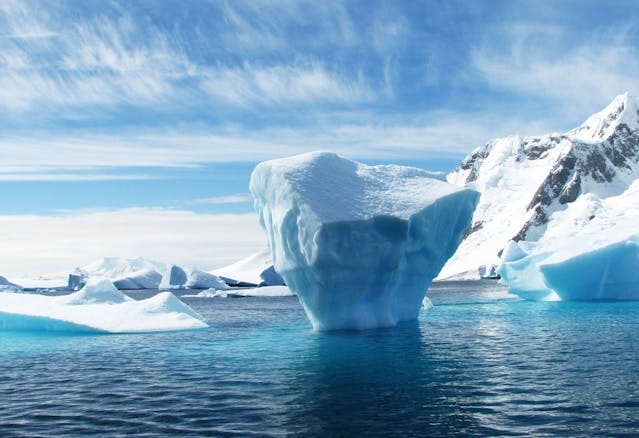
Arctic sea ice melting has long been one of the clearest indicators of climate change, a sentinel of rising global temperatures. Yet recent findings reveal a surprising twist: the decline in sea ice extent has slowed significantly over the last two decades, with no statistically significant drop observed since 2005. This unexpected plateau has captivated scientists, raising questions about the dynamics of ice loss in a warming Arctic and the forces behind this temporary slowdown. While the world continues to emit greenhouse gases at alarming rates, the Arctic appears to have caught a brief, natural reprieve — one that may soon end.
Understanding the Recent Slowdown
For decades, satellites have meticulously tracked the Arctic’s frozen cover, documenting a sharp and steady decline in ice area and thickness. Surprisingly, data from 2005 onward show a slowdown in the loss of ice extent. Researchers emphasize that this is not a reversal of climate change, but rather a temporary fluctuation influenced by oceanic conditions.
Ocean currents play a crucial role in regulating the Arctic climate. Multi-decadal variations in the Atlantic and Pacific inflows appear to have temporarily reduced the influx of warmer water into the region. As a result, ice melting has slowed even as global temperatures have continued to climb.
This slowdown in Arctic sea ice melting is not a reprieve from climate change; it’s a temporary pause influenced by natural oceanic cycles.
The Role of Ocean Currents
Oceanic currents act as conveyor belts, redistributing heat across the globe. In the Arctic, the Atlantic Meridional Overturning Circulation and Pacific inflows can accelerate or retard ice loss depending on temperature anomalies and flow strength. These natural fluctuations are superimposed on the long-term warming trend, temporarily masking the full impact of greenhouse gas emissions on ice extent.
Despite this temporary slowdown, the Arctic remains highly vulnerable. Thinning ice continues, suggesting that the volume of ice — a key measure of the Arctic’s health — is still decreasing even if surface area appears relatively stable.
Long-Term Context: Ice Loss Since 1979
Satellite monitoring of the Arctic began in 1979, providing the longest continuous record of ice coverage. At that time, the annual minimum sea-ice area in September was roughly double what it is today. Even with the recent slowdown, the Arctic is far from recovery.
This highlights a critical point: a temporary pause in the decline of sea ice extent does not signal a rebound. The Arctic is still on a trajectory toward becoming seasonally ice-free, likely later this century, with profound implications for ecosystems, human communities, and global climate patterns.
Even with a pause in sea ice melting, the Arctic remains on track for dramatic loss later this century.
Implications of an Ice-Free Arctic
The Arctic acts as Earth’s refrigerator, reflecting sunlight with its bright ice cover and helping regulate global temperatures. As ice recedes, darker ocean surfaces absorb more heat, amplifying warming through a process known as the albedo effect. This creates a feedback loop: more heat leads to more melting, which leads to further warming.
An ice-free Arctic is more than a symbolic milestone. It threatens wildlife, disrupts weather patterns far beyond the polar region, and impacts local communities dependent on ice for transportation, hunting, and cultural practices.
Loss of Arctic sea ice has cascading effects — from polar bears to global weather extremes — that extend far beyond the region itself.

The study underpinning these observations used two independent satellite datasets spanning 1979 to the present. Researchers analyzed monthly ice cover to ensure seasonal variations were captured accurately. By examining long-term trends alongside natural fluctuations, scientists could differentiate between temporary pauses and sustained decline.
Climate models corroborate these findings, showing that multi-decadal natural variability can cause brief periods of slower ice loss even in a warming world. Still, once these fluctuations reverse, the models predict ice loss will resume at an accelerated pace — potentially twice the long-term average over the next five to ten years.
Reconciling Natural Variability and Climate Change
The recent slowdown exemplifies how natural variability can obscure underlying long-term trends. Some might be tempted to view this plateau as a sign of progress in combating climate change. However, scientists caution that this interpretation is misleading.
Even when surface area remains stable, thinning continues. Ice is not disappearing evenly; some regions may experience growth while others lose ice rapidly. Volume measurements indicate a steady decline, demonstrating that the Arctic is still losing ice mass and energy from the sun is increasingly absorbed by the ocean.
Global Warming and Greenhouse Gas Emissions
Global warming remains the primary driver of Arctic ice loss. Atmospheric carbon dioxide levels continue to climb, and the associated rise in temperature contributes to melting both on the surface and beneath the ice. The recent slowdown does not imply that mitigation efforts can be relaxed. Instead, it provides an opportunity for scientists to better understand the complex interactions between ocean currents, atmospheric conditions, and ice dynamics.
Arctic sea ice melting is a sentinel of climate change; its temporary slowdown should not distract from the urgent need to reduce emissions.
Societal and Environmental Impacts
Arctic communities face unique challenges as ice patterns shift unpredictably. Traditional hunting and fishing routes are affected, and infrastructure built on permafrost risks destabilization as ice thins. Beyond the Arctic, changes in sea-ice coverage influence global weather, including the jet stream, which can affect precipitation, storms, and temperature extremes in Europe, Asia, and North America.
Ecosystems are equally vulnerable. Polar bears, seals, and walruses rely on stable ice platforms for hunting and reproduction. A temporary slowdown in melting does not guarantee the survival of these species, whose populations are sensitive to even small changes in ice availability.
Future Outlook
While this period of slowed ice loss provides scientists with valuable data, it is expected to be temporary. Models suggest that as oceanic cycles shift, ice melting will accelerate. This has critical implications for climate policy, Arctic management, and global adaptation strategies.
The Arctic’s temporary slowdown is a window into natural variability, not a reversal of climate change.
Researchers stress that the long-term trend remains unambiguously downward. Even a decade of slowed melting cannot offset decades of prior decline. Therefore, continued monitoring, robust climate action, and adaptive strategies for Arctic communities remain essential.
Conclusion
The dramatic slowdown in Arctic sea ice melting highlights the complex interplay between natural variability and long-term climate change. While this temporary reprieve offers a momentary glimpse of stability, the Arctic is far from recovered. Ice thinning continues, ecosystems remain at risk, and long-term projections point toward an ice-free Arctic in summer later this century.
Yet, there is a cautious note of optimism: by understanding the mechanisms behind natural pauses, scientists can improve predictive models and guide policy decisions. The Arctic’s fleeting stability is a reminder of both the fragility and resilience of Earth’s polar systems — and of the urgent need to address the broader forces of climate change driving their long-term transformation.
References
- National Aeronautics and Space Administration (NASA). Arctic Sea Ice News & Analysis. https://nsidc.org/arcticseaicenews/
- National Oceanic and Atmospheric Administration (NOAA). Arctic Report Card 2024. https://www.arctic.noaa.gov/Report-Card
Disclaimer: Some aspects of the webpage preparation workflow may be informed or enhanced through the use of artificial intelligence technologies. While every effort is made to ensure accuracy and clarity, readers are encouraged to consult primary sources for verification. External links are provided for convenience, and Honores is not responsible for their content or any consequences arising from their use.