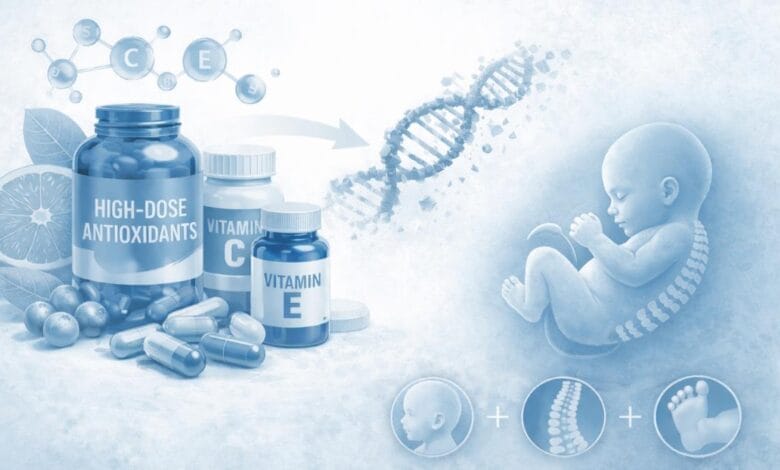
Antioxidants are important for protecting the body from damage caused by free radicals, but when it comes to supplements, most doctors are cautious. In general, medical professionals do not recommend antioxidant pills for healthy people. Instead, doctors advise getting antioxidants naturally through a balanced diet rich in fruits and vegetables. However, they may prescribe specific antioxidant supplements in cases of deficiencies or certain medical conditions. On the other hand, many people choose to take these supplements on their own, influenced by marketing, trends, or the belief that they improve immunity and slow aging, even though such benefits are not always scientifically proven.
But what if that assumption is not always true? What if something meant to protect the body could quietly affect the next generation in ways that are not immediately visible? Recent research begins to explore this possibility, raising careful questions about how much is too much and what happens beneath the surface. A recently published study suggests that very high doses of antioxidants may affect future offspring.
The research examined how high levels of certain antioxidants influence male reproductive cells. The focus was on N acetyl L cysteine and selenium, which are commonly found in supplements. In the study, male mice were given high doses of these antioxidants for six weeks. After this period, researchers examined their sperm and observed the development of their offspring. The male mice appeared healthy. However, changes were found in their sperm DNA. Its known that the DNA carries the instructions for growth and development. Changes in sperm DNA can affect how an offspring develops.
What Happened to the Offspring
When the offspring were born, some differences were observed. Female offspring showed facial changes. Their eyes were closer together, and their skulls were smaller compared to typical development. These features are important because facial and brain development occur at the same time. Changes in facial structure can be linked with changes in brain development. The effects were more noticeable in female offspring. Male offspring showed fewer visible changes. This suggests that female embryos may respond differently to these conditions.
The study also showed a clear pattern. Higher doses of antioxidants were linked with more noticeable changes. This indicates a dose dependent relationship. Researchers connect these effects to redox balance. The body maintains a balance between reactive molecules and antioxidants. When antioxidant levels are too high, this balance may be disturbed. Such imbalance can affect how sperm develops. It may also influence early stages of embryo development.
Why Too Much of a Good Thing Can Be Harmful
Antioxidants play an important role in protecting cells. However, excessive intake may lead to unintended effects. The study supports the idea of a U shaped relationship. Both low and very high levels can be harmful, while moderate levels support normal function. Supplement use is common in many countries. Some individuals consume antioxidant levels that are much higher than recommended. In some cases, intake can be several times above daily guidelines. This raises concerns for men planning to have children. Even if there are no visible health issues, changes in sperm DNA may affect offspring development.
What This Means for Humans
The study was conducted on mice, not humans. Direct conclusions for humans cannot be made with certainty. Differences in metabolism and dosage response exist between species. At the same time, basic biological processes such as sperm development and early embryo formation are similar across mammals. This makes the findings relevant for further investigation. Human studies on this topic are limited due to ethical constraints. For now, caution is advised with high dose supplementation, especially before conception.
Following recommended daily intake levels is considered a safer approach. A balanced diet usually provides sufficient nutrients without the need for excessive supplementation. The findings also highlight the role of paternal health. Reproductive health discussions often focus on the mother, but sperm quality is also an important factor in development.
A Simple Takeaway
Antioxidants support normal cell function, but excessive intake may have negative effects. High doses may alter sperm DNA and influence how offspring develop, including facial structure and possibly brain development. More research is needed to understand the full impact in humans. Maintaining balanced intake and following established guidelines can help reduce potential risks.
FAQs on Antioxidants and Male Fertility
Q: Can taking too many antioxidants affect male fertility and sperm quality?
A: Yes, high intake of antioxidants may affect sperm quality. The study found that excessive levels of certain antioxidants can alter sperm DNA, which plays a key role in development. Even if a man appears healthy, these changes may still influence reproductive outcomes.
Q: How do high doses of antioxidants impact offspring development?
A: High doses may affect how an embryo develops in early stages. The research showed changes in facial features such as closer-set eyes and smaller skull size in offspring. These features are linked with early brain development, as both develop together.
Q: Are antioxidants harmful when trying to conceive a baby?
A: Antioxidants are not harmful at normal levels; they are important for cell protection in many ways. Problems may arise when intake goes far beyond recommended amounts. Maintaining moderate levels is considered safer when planning for conception.
Q: What are the risks of taking N acetyl L cysteine and selenium supplements in high doses?
A: When taken in very high doses, these supplements may disrupt the body’s internal balance. This can affect sperm DNA and potentially influence how an offspring develops. The study highlights a dose dependent effect, meaning higher intake increases the risk.
Q: Is there a safe limit for antioxidant supplements for men?
A: Safe limits are generally based on recommended daily allowances. The study suggests that exceeding these limits by several times may carry risks. Following label guidelines and avoiding excessive supplementation is advised.
Q: Do antioxidant supplements affect male fertility differently than diet-based antioxidants?
A: Supplements can deliver much higher doses compared to a regular diet. This makes it easier to exceed safe levels when using pills or powders. A balanced diet usually provides antioxidants in safer amounts without reaching extreme levels.
Q: Can changes in sperm DNA really affect a baby’s physical features?
A: Yes, sperm DNA carries instructions that guide early development. Changes in this DNA can influence how certain features form during pregnancy. The study observed visible facial differences linked to these changes.
Q: Why are female offspring more affected by high antioxidant intake in this study?
A: The study observed stronger effects in female offspring, though the exact reason is not fully clear. It suggests that female embryos may be more sensitive to certain developmental changes. More research is needed to understand this difference.
Q: Should men stop taking antioxidant supplements before planning pregnancy?
A: Stopping is not always necessary, but reviewing dosage is important. Avoiding high dose supplementation and sticking to recommended levels may reduce potential risks. Consulting a healthcare professional can help guide safe use.
Q: Are the effects of high antioxidant intake in mice relevant to humans?
A: The study was conducted on mice, so direct conclusions for humans are not certain. However, similar biological processes exist in humans, making the findings important for further research. It suggests caution, especially with excessive supplement use.
External Sources:
- Derrico DD, Scaturro KZ, Murray EE, Guillen E, Truss NS, Fairly KA, Higgins SL, Bhadsavle SS, Golding MC. Therapy to teratology: chronic paternal antioxidant supplementation alters offspring placental architecture and craniofacial morphogenesis in a mouse model. Frontiers in Cell and Developmental Biology. 2025 Dec 19;13:1697843. Doi: 10.3389/fcell.2025.1697843.
- Moazamian A, Saez F, Drevet JR, Aitken RJ, Gharagozloo P. Redox-driven epigenetic modifications in sperm: unraveling paternal influences on embryo development and transgenerational health. Antioxidants. 2025 May 9;14(5):570. Doi: 10.3390/antiox14050570.
- Ahmadi S, Bashiri R, Ghadiri-Anari A, Nadjarzadeh A. Antioxidant supplements and semen parameters: An evidence based review. International journal of reproductive biomedicine. 2016 Dec;14(12):729.
Disclaimer:
Some aspects of the webpage preparation workflow may be informed or enhanced through the use of artificial intelligence technologies. While every effort is made to ensure accuracy and clarity, readers are encouraged to consult primary sources for verification. External links are provided for convenience, and Honores does not endorse, control, or assume responsibility for their content or for any outcomes resulting from their use. The author declares no conflicts of interest in relation to the external links included. Neither the author nor the website has received any financial support, sponsorship, or external funding. This content is for informational purposes only and is not medical advice. Please consult a qualified physician before making health decisions. Images are for representational purposes only. Image Credit: Generated through AI.