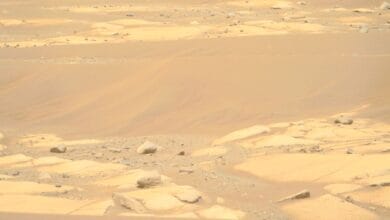
The search for life beyond Earth has always captured the imagination of scientists and the public alike. Recent NASA-funded experiments suggest that Martian ice could act as a natural time capsule, preserving biomolecules for millions of years. The study’s findings indicate that ice-rich regions on Mars may offer the most promising locations to detect traces of past or even extant microbial life. By simulating Martian conditions, researchers have begun to uncover how amino acids and other biomolecules might endure the harsh environment of the Red Planet, informing the strategies of future exploration missions.
The Promise of Martian Ice
Unlike rocks and surface soils, Martian ice may protect delicate biomolecules from the relentless radiation and oxidizing chemicals present on the planet’s surface. Ice-rich permafrost could therefore serve as a haven for preserved organic compounds, potentially including remnants of ancient microbial life.
Why Ice, Not Rocks?
Historically, Mars missions have often focused on rocky terrain, clay minerals, and surface soils to search for biosignatures. However, this new research suggests that pure ice may offer far greater preservation potential. Experiments reveal that amino acids—the building blocks of proteins—remain more intact in pure ice than when mixed with mineral grains, which accelerate molecular degradation.
Martian ice acts like a time capsule, potentially preserving biomolecules for tens of millions of years.
Simulating Martian Conditions in the Lab
To explore the potential longevity of biomolecules, researchers at NASA Goddard and Penn State University conducted meticulous laboratory simulations. Samples of Escherichia coli were frozen in pure water ice and in mixtures containing silicate-based mineral grains analogous to Martian soil. These samples were cooled to –60 °F (approx. –51 °C), reflecting the typical temperatures of Mars’ icy regions, and exposed to gamma radiation to simulate the cumulative effects of cosmic rays over millions of years.
Cosmic Radiation Challenges
Cosmic rays and solar radiation pose a significant threat to biomolecules on Mars. By exposing the frozen samples to gamma radiation equivalent to 20 million years of Martian exposure, with modeling extending this to 50 million years, researchers could assess the durability of key organic compounds.
More than 10% of amino acids survived in pure ice after 50 million years of simulated cosmic radiation exposure.
Differential Preservation: Ice vs. Soil
The experiments revealed a striking contrast between pure ice and ice mixed with mineral grains. While amino acids persisted in the pure-ice samples, they degraded rapidly—or even completely—in the presence of mineral dust.
Implications for Biomolecule Detection
This differential preservation has profound implications for life-detection strategies on Mars. Ice-rich regions may be the ideal targets for sampling and analysis, as the likelihood of encountering preserved organic molecules is significantly higher than in mineral-laden soils.
Future missions searching for life should prioritize ice-rich permafrost rather than rocks or surface soils.
The use of E. coli as a model organism provides insights into microbial survival under extreme conditions. While E. coli itself is not native to Mars, studying its preservation helps estimate the durability of more robust extremophiles, such as psychrophiles, which thrive in subzero temperatures on Earth.
From Antarctic subglacial lakes to permafrost in Siberia, Earth’s extremophiles demonstrate that microbial life can persist for millennia in icy habitats. These terrestrial analogues bolster the argument that Mars’ ice-rich regions may have preserved biomolecules or even dormant life forms over geological timescales.
Strategic Implications for Mars Missions
NASA and other space agencies are now reconsidering the focus of Mars exploration. Ice-rich permafrost regions could become high-priority targets for rovers and landers equipped with sampling and molecular detection instruments.
The study suggests that direct sampling of subsurface ice—rather than surface soils or rocks—would maximize the chances of detecting preserved biomolecules. Techniques such as drilling, cryogenic preservation, and spectroscopic analysis could enable the detection of amino acids, lipids, and nucleic acids.
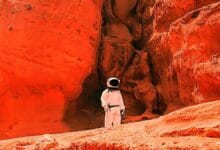



Ice-rich permafrost is a natural archive, holding clues to past Martian life that may have gone undetected in previous missions.
Challenges and Limitations
While promising, the research highlights several limitations. Laboratory conditions, although carefully controlled, cannot replicate every aspect of the Martian environment. Factors such as variable radiation flux, soil chemistry, and unknown microbial biochemistry may affect biomolecule preservation in situ.
Caution is warranted when extrapolating from laboratory simulations to Mars. The survival rates of amino acids in mixed ice-soil matrices suggest that local geological variations could significantly influence preservation potential.
Future Directions
The study opens new avenues for astrobiology and planetary exploration. Future missions could integrate these findings into site-selection criteria, focusing on:
- Subsurface ice sampling to maximize biomolecule detection
- High-precision molecular analysis to identify preserved amino acids and other organics
- Comparative studies between ice-rich and mineral-dominated regions to assess degradation rates
Understanding biomolecule preservation on Mars also informs the search for life elsewhere, including icy moons like Europa and Enceladus. The principles derived from Martian ice studies may guide mission planning across the solar system, identifying environments most likely to harbor evidence of life.
Martian ice acts not only as a protective barrier against radiation but also as a historical archive. By preserving biomolecules over tens of millions of years, ice offers a rare window into Mars’ past environmental conditions and the potential for life.
Ice is not just frozen water—it’s a window into the ancient Martian biosphere.
Integrating Laboratory and Mission Data
Future exploration efforts will benefit from a synergistic approach: laboratory studies simulating Martian conditions can inform mission design, while in situ observations can validate laboratory predictions. This iterative process enhances the accuracy of life-detection strategies.
Recommendations for Mission Planning
- Prioritize ice-rich regions for rover and lander deployment
- Use cryogenic sampling to prevent biomolecule degradation
- Employ advanced spectroscopy and sequencing tools for molecular detection
- Compare preservation in different substrates to understand environmental effects
Discovering preserved biomolecules—or evidence of past microbial life—on Mars would have profound implications for science and society. Beyond expanding our understanding of life’s resilience, such findings could inspire new technologies, influence planetary protection policies, and spark philosophical debates about life beyond Earth.
Conclusion
NASA-funded studies exploring extremophiles and biomolecule preservation in Martian ice suggest that ice-rich permafrost regions offer the best prospects for detecting life. Laboratory simulations indicate that amino acids can endure millions of years under frozen conditions, whereas mineral-rich soils accelerate degradation. These insights shift the strategic focus of Mars missions toward subsurface ice sampling, providing a roadmap for future exploration. While challenges remain, Martian ice may hold the keys to understanding the Red Planet’s potential for life, acting as a natural archive of its biological history.
Disclaimer
Some aspects of the webpage preparation workflow may be informed or enhanced through the use of artificial intelligence technologies. While every effort is made to ensure accuracy and clarity, readers are encouraged to consult primary sources for verification. External links are provided for convenience, and Honores is not responsible for their content or any consequences arising from their use.
References / External Links
- Penn State University. “Are there living microbes on Mars? Check the ice, researchers say.”
- NASA Goddard Space Flight Center. “Astrobiology: Life in Extreme Environments.”
- Horneck, G., et al. “Microbial survival in space: Results from laboratory experiments.” Planetary and Space Science, 2012.
- Boston, P.J., et al. “Extremophiles and the search for life on Mars.” Astrobiology, 2015.