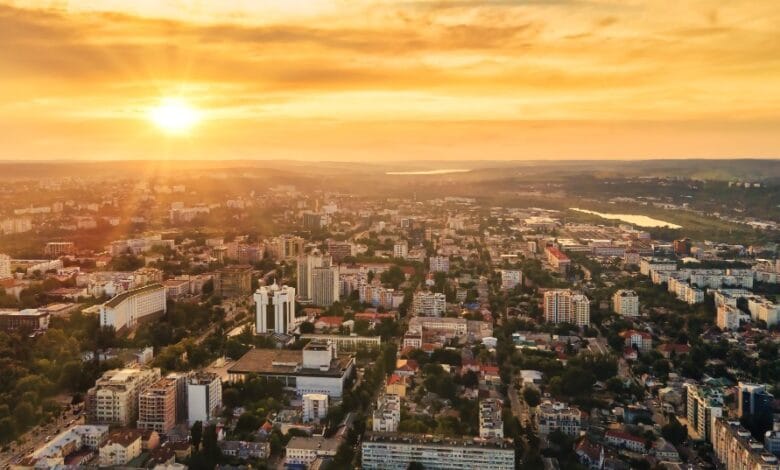
With more than 55% of the world’s population living in cities today—and projections suggesting this could rise to 70% by 2050—urban areas are at the forefront of climate risk. Among the most pressing threats is extreme urban heat. Cities absorb and retain heat due to dense infrastructure, asphalt surfaces, and human activity, creating what scientists call the urban heat island (UHI) effect. Urban heat mitigation is increasingly recognized as essential not just for comfort, but for public health and climate resilience.
Early studies indicate that by mid-century, the maximum temperature of the warmest month in many cities could rise by an average of +1.7 °C, with some cities experiencing spikes up to +4 °C, especially under high-emission scenarios (SSP5‑8.5). Even areas already hot today—like South Asia or North Africa—are projected to face further warming. The urgency of these findings underscores the need for nature-based solutions (NbS)—including urban forests, green roofs, permeable pavements, and other greening strategies—to reduce exposure and build more resilient urban environments.
The Rising Threat of Urban Heat
Global Trends and Projections
Urbanization is rapidly intensifying, concentrating populations in heat-prone environments. Across 5,646 cities in 218 countries, projections indicate a concerning rise in extreme heat events. While the average temperature increase might seem modest at +1.7 °C, even small increments can have substantial human health impacts, exacerbated by the UHI effect, which can raise local temperatures 1-4 °C above surrounding rural areas.
Even a small rise in urban temperatures can significantly impact human health, especially in already vulnerable populations.
Human Health and Well-Being Implications
Rising urban heat can increase risks of heat exhaustion, respiratory strain, and premature mortality, particularly among elderly, children, and socio-economically disadvantaged populations. The compounding effect of dense built environments and limited green space intensifies these risks.
Cities without adequate green spaces expose residents to amplified heat, with measurable health consequences.
High-Risk Cities
Mid- to high-latitude cities in Europe, North America, and Australia may see some of the largest temperature spikes, while tropical and subtropical cities will face intensification of already extreme conditions. Cities must anticipate both immediate health risks and long-term infrastructural challenges.
Nature-Based Solutions: A Way Forward
Urban Forests and Green Spaces
Urban forests can provide cooling through shade and evapotranspiration, reducing local temperatures by 1–3 °C in well-designed settings. Parks and street trees also enhance mental well-being and air quality.
Strategically planted urban forests can become natural air conditioners, benefiting millions of city residents.
Green Roofs and Walls
Rooftop gardens and vertical greenery reduce heat absorption from buildings and lower indoor temperatures. Besides mitigating heat, they capture CO₂, manage stormwater, and enhance biodiversity. Effectiveness depends on building density, local climate, and maintenance feasibility.
Permeable Surfaces and Cool Pavements
Replacing asphalt with permeable or reflective surfaces decreases heat retention in urban areas. Coupled with water-sensitive urban design, these interventions improve drainage while reducing the UHI effect.
Synergistic Approaches
NbS are most effective when combined with other climate-resilient infrastructure—like reflective roofs, energy-efficient buildings, and urban water management systems. Integrated strategies can optimize temperature reduction and support net-zero emissions goals.
Combining greenery with smart urban design creates resilient cities prepared for escalating heat risks.
Challenges
Despite their promise, NbS are not one-size-fits-all. Effectiveness varies with local climate, urban structure, governance, and social equity. Successful implementation requires tailored planning, community engagement, and equitable access.




- Temperature reduction estimates may vary by city density and vegetation type.
- Maintenance and long-term sustainability depend on funding and local governance.
- Socioeconomic disparities can limit access to green infrastructure benefits.
Nature-based solutions are powerful, but their success hinges on careful, context-specific planning.
Implementing urban heat mitigation strategies has implications beyond temperature control. Green infrastructure can:
- Enhance public health and social equity
- Support biodiversity in urban environments
- Contribute to climate adaptation policies at municipal and national levels
Policymakers are encouraged to prioritize NbS in city planning, integrate them into climate action strategies, and ensure that vulnerable communities benefit equitably from urban greening projects.
As cities face hotter summers and more frequent heatwaves, research is needed to:
- Assess long-term effectiveness of NbS across diverse climates
- Model synergistic benefits of combined interventions
- Develop cost-effective, equitable strategies for global urban populations
Even small gains in urban heat mitigation can protect millions of residents and strengthen climate resilience.
Investing in urban greenery today can pay dividends in health, climate resilience, and quality of life tomorrow.
Conclusion
Urban heat poses a growing threat as the world urbanizes. While temperature rises are projected globally, nature-based solutions offer a practical and adaptable approach to reduce exposure, improve human well-being, and support sustainable urban futures. Tailored planning, equitable implementation, and integration with broader climate strategies are essential to ensure cities remain livable, safe, and resilient in the decades ahead.
Sources
- Oke, T.R. (1982). The energetic basis of the urban heat island. Quarterly Journal of the Royal Meteorological Society, 108(455), 1–24.
- Bowler, D.E., Buyung-Ali, L., Knight, T.M., & Pullin, A.S. (2010). Urban greening to cool towns and cities: A systematic review of the empirical evidence. Landscape and Urban Planning, 97(3), 147–155.
- World Bank. (2022). Cities and Climate Change: Urban Heat Challenges. https://www.worldbank.org
Disclaimer: Some aspects of the webpage preparation workflow may be informed or enhanced through the use of artificial intelligence technologies. While every effort is made to ensure accuracy and clarity, readers are encouraged to consult primary sources for verification. External links are provided for convenience, and Honores is not responsible for their content or any consequences arising from their use.