Per- and polyfluoroalkyl substances (PFAS) are synthetic chemicals prized for their resistance to heat, water, and oil. Found in firefighting foams, nonstick cookware, textiles, and packaging, they have spread widely in the environment. Their persistence and bioaccumulation have raised global alarm, making PFAS a significant long-term concern for ecosystems and human health alike.
Perfluoroalkyl and polyfluoroalkyl substances (PFAS), often called “forever chemicals,” are notorious for their stubborn persistence. Found in everything from drinking water to industrial sites, these chemicals accumulate over decades, creating a long-term challenge for public health and the environment. But could microbes hold part of the solution?
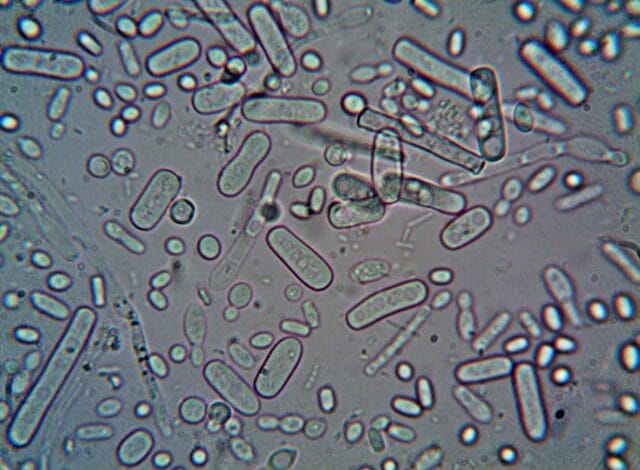
Recent work at the University of Nebraska–Lincoln explored this idea by testing Rhodopseudomonas palustris, a photosynthetic bacterium, for its ability to interact with PFOA, a common PFAS compound. Over 20 days, the microbe drew nearly half of the chemical into its cell membranes. While it didn’t chemically break down the PFAS, this temporary “sink” effect hints at a future where microbes could play a meaningful role in PFAS cleanup—if the challenges can be overcome.
PFAS: The Global Environmental Challenge
PFAS have been used extensively since the 1940s due to their water- and oil-repellent properties. From firefighting foams at airports to stain-resistant fabrics and nonstick cookware, these chemicals are almost everywhere. Their stability, once seen as a benefit, now makes them a long-lasting pollutant. They persist in soil, water, and living organisms, earning the nickname “forever chemicals.”
PFAS persistence has turned everyday products into environmental hazards, sparking worldwide concern.
Public health studies indicate that chronic exposure may affect the immune system, hormonal balance, and even cancer risk. Contamination in drinking water has become widespread, prompting governments and scientists to search for innovative ways to remediate the problem. Traditional methods, such as incineration or adsorption, are energy-intensive and costly, highlighting the appeal of biological alternatives.
The Role of Rhodopseudomonas palustris
Rhodopseudomonas palustris is a photosynthetic bacterium found in soil and water. Its natural ability to interact with diverse organic compounds made researchers curious about its potential role in PFAS management. In controlled laboratory experiments, researchers exposed the microbe to perfluorooctanoic acid (PFOA), a widely studied PFAS.
Over 20 days, R. palustris absorbed roughly 44% of PFOA from the surrounding medium. Most of this uptake occurred as the chemical partitioned into the bacterium’s cell membranes. While promising, this process was only temporary: many of the PFOA molecules later re-entered the environment, likely due to cell lysis.
The bacterium acted as a temporary ‘sink,’ hinting at future microbial cleanup potential—but the journey toward full PFAS degradation remains challenging.
Mechanism of PFAS Sequestration
The absorption appears to be purely physical; researchers did not observe any chemical transformation of PFOA under the tested conditions. Essentially, the bacterium temporarily stores PFAS within its cell membranes, slowing environmental dispersal.
This discovery is significant for two reasons. First, it demonstrates that microbes can interact with highly persistent pollutants. Second, it opens the door for potential enhancements via genetic engineering or synthetic biology—strategies that could improve retention or even enable enzymatic breakdown in the future.
Comparison with Traditional Remediation Techniques
Current PFAS remediation methods often involve activated carbon filters, reverse osmosis, or high-temperature incineration. These techniques are effective but costly, energy-intensive, and not always environmentally sustainable.
Microbial approaches, like those involving R. palustris, offer a different path: natural, potentially low-energy interventions that could complement conventional technologies. However, the temporary nature of microbial sequestration means that additional engineering would be required for practical deployment.
Microbial sequestration may become a hybrid solution when paired with existing cleanup technologies, reducing energy demands while tackling persistent pollutants.




Despite the promise, several limitations remain. The bacterium does not currently degrade PFAS chemically, meaning the pollutant may eventually return to the environment. Laboratory conditions are controlled, and real-world environments are far more variable. Additionally, the long-term ecological effects of deploying genetically enhanced microbes require careful study.
This is a tentative step; real-world PFAS remediation using microbes will need careful design and monitoring.
Experts emphasize that while early results are encouraging, caution is necessary. Overstating microbial capabilities could mislead policymakers or the public.
Researchers suggest multiple avenues for further exploration:
- Genetic Engineering: Modifying microbial pathways to enhance PFAS retention or enable chemical transformation.
- Synthetic Biology: Designing microbial consortia that work synergistically to target different PFAS compounds.
- Hybrid Remediation Systems: Integrating microbes with filtration, adsorption, or chemical treatment for more robust cleanup.
- Field Studies: Testing efficacy under real-world environmental conditions to assess practicality and ecological safety.
Innovative microbial solutions could one day form part of a sustainable strategy against stubborn PFAS pollutants.
While these directions are speculative, they underscore a cautiously optimistic vision: microbes could complement conventional cleanup approaches, potentially reducing energy use and environmental disruption.
PFAS contamination is a public-health concern worldwide. Millions of people are exposed through drinking water, food, and consumer products. Long-term ecological effects include contamination of aquatic ecosystems and bioaccumulation in wildlife.
Harnessing microbes like R. palustris could contribute to safer water and soil management strategies, reducing the global burden of “forever chemicals.” Even partial PFAS sequestration could provide breathing room for traditional remediation methods, improving overall environmental management efficiency.
Conclusion
The discovery that Rhodopseudomonas palustris can absorb PFAS from its environment represents an exciting proof-of-concept in microbial bioremediation. Although the bacterium does not yet degrade PFAS chemically, its temporary sequestration of these persistent compounds highlights a novel biological approach.
Future research leveraging genetic engineering, synthetic biology, and hybrid remediation strategies could enhance the effectiveness of microbial PFAS cleanup. This work exemplifies cautious optimism: incremental, evidence-driven innovation may ultimately yield more sustainable solutions to one of the planet’s most persistent chemical challenges.
Pull Quote: “Microbial PFAS sequestration offers hope, signaling a step toward sustainable solutions for long-lasting environmental pollutants.”
References:
- EPA. Per- and Polyfluoroalkyl Substances (PFAS). https://www.epa.gov/pfas
- Grandjean, P., et al. PFAS and Human Health: Epidemiological Evidence. Environmental Health Perspectives, 2020. https://ehp.niehs.nih.gov/doi/10.1289/EHP6224
- Wang, Z., et al. A Never-Ending Story of PFAS: Environmental Occurrence, Toxicity, and Remediation. Science of the Total Environment, 2017. https://www.sciencedirect.com/science/article/pii/S0048969717315659
Disclaimer: Some content on this page may have been created or reviewed with the help of artificial intelligence tools. While every effort is made to ensure reliability, readers are advised to consult primary sources. External links and references are offered for convenience, and Honores is not liable for their content or impact.