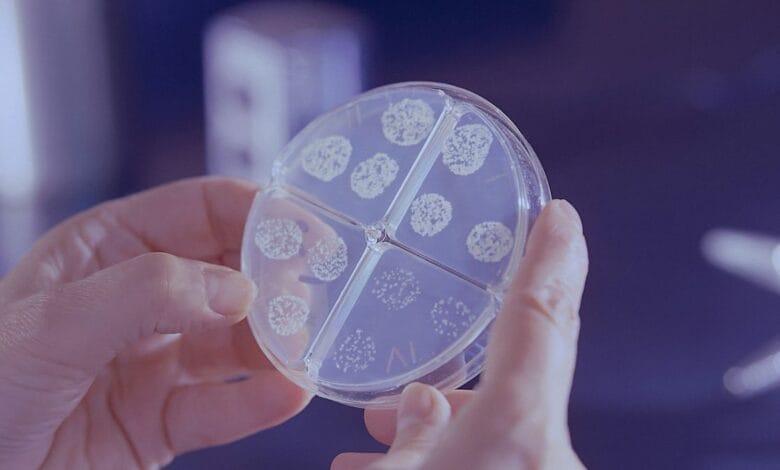
From ancient times, bacteria have supported human life in many ways. Early communities used them to prepare foods like curd, cheese, and fermented grains, even without understanding how they worked. Over time, bacteria became important in medicine and industry, helping produce antibiotics, vaccines, and other essential products. Inside the human body, bacteria also play a steady role. The gut microbiome, which is a group of microbes in the digestive system, helps with digestion, supports the immune system, and keeps internal balance.
Scientists are studying how bacteria inside the body may affect diseases beyond infections, including cancer. Recent research in laboratory and animal models focuses on how certain harmful bacteria interact with breast tissue and cancer cells. These studies examine whether bacterial activity can influence processes like DNA damage, inflammation, and tumor growth, and how these effects may connect to breast cancer progression.
Laboratory and animal studies show that specific bacteria may influence how breast cancer develops and spreads. These include Bacteroides fragilis, Fusobacterium nucleatum, and certain strains of Escherichia coli. Researchers studied how these bacteria interact with breast tissue and cancer cells. The findings show that these bacteria can increase the activity of an enzyme called spermine oxidase, or SMOX. This enzyme is linked to processes that can damage DNA inside cells.
What Happens Inside the Body
Cells rely on DNA to control growth and function. When DNA is damaged, cell behavior can change. This can lead to uncontrolled growth, which is a feature of cancer. In these studies, breast cancer cells and tissue models were exposed to the bacteria. SMOX activity increased after exposure. This enzyme produces reactive oxygen species, which can damage DNA and create cellular stress. The bacteria also triggered inflammation. Cells released substances such as interleukin 6 and tumor necrosis factor alpha. These signals are linked to increased stress and tumor activity.
DNA damage and inflammation together created conditions where cancer cells grew faster and showed a higher tendency to spread. In animal models, tumors increased in size and spread more often compared to controls. Researchers also tested the effect of reducing SMOX activity. When this enzyme was inhibited, tumor growth and spread decreased in the models. This identifies SMOX as a functional link between bacterial activity and cancer progression in these experiments.
The Role of Specific Bacteria
Fusobacterium nucleatum is a bacterium commonly found in the mouth and associated with gum disease. In experiments, it was able to enter the bloodstream and reach breast tissue. In breast tissue models, it was linked to abnormal cell changes, DNA damage, and inflammation. It also increased tumor growth and spread, including movement to the lungs in animal studies.
Cells with BRCA1 mutations showed higher levels of bacterial binding and retention. These cells also showed stronger tumor-related effects under the same conditions. Bacteroides fragilis and Escherichia coli showed similar effects in experimental settings. These bacteria are part of the normal gut microbiome, but certain strains can produce toxins. In the studies, they influenced cellular processes linked to cancer growth.
What this Means for Human Health
These findings come from laboratory and animal models. These models are used to study mechanisms under controlled conditions, but they do not represent all aspects of human biology. Cancer risk in humans depends on multiple factors, including genetics, age, diet, and lifestyle. Some observational studies have reported links between microbial imbalance and cancer, but these studies do not establish cause and effect. The human microbiome includes many interacting organisms. Changes in this system vary between individuals and over time, which adds complexity to these findings.
Why this Research Still Matters
The studies identify a mechanism through which bacteria can affect cancer-related processes. The SMOX pathway connects bacterial exposure to DNA damage and inflammation in these models. This information may guide further research. Future studies may examine microbial markers or test ways to target pathways such as SMOX. These approaches are not part of current clinical practice. Current medical guidelines do not include microbiome-based strategies for breast cancer prevention or treatment. More research in human populations is required before clinical use.
FAQs on Bacteria liked to Breast Cancer
Q: How do bacteria influence breast cancer development?
A: Certain bacteria can interact with cells and increase the activity of enzymes like spermine oxidase. This can lead to DNA damage and inflammation, which are linked to cancer growth. These effects have been observed in laboratory and animal studies.
Q: What is the role of the SMOX enzyme in breast cancer?
A: SMOX, or spermine oxidase, is an enzyme involved in cell metabolism. When its activity increases, it produces molecules that can damage DNA and create cellular stress. This process is associated with tumor growth and spread in experimental models.
Q: Which bacteria are linked to breast cancer in research studies?
A: Studies have focused on bacteria such as Bacteroides fragilis, Fusobacterium nucleatum, and certain strains of Escherichia coli. These bacteria are known to affect cellular processes in ways that may support cancer progression under controlled conditions.
Q: Can gut bacteria really affect breast cancer risk?
A: The gut microbiome plays a role in overall health, including immune function and inflammation. Some research suggests that imbalances in gut bacteria may influence cancer-related processes. However, direct links in humans are still being studied.
Q: Does this mean bacteria cause breast cancer in humans?
A: Current evidence does not prove that bacteria directly cause breast cancer in humans. Most findings come from laboratory and animal models. Human studies show associations, but causation has not been confirmed.

Q: How does inflammation caused by bacteria affect cancer growth?
A: Bacteria can trigger the release of inflammatory signals such as interleukin 6 and tumor necrosis factor alpha. These signals create an environment that can support tumor growth and spread. Chronic inflammation is a known factor in many diseases, including cancer.
Q: Are these bacteria harmful or part of the normal body system?
A: Many of these bacteria are normally found in the human body, especially in the gut or mouth. They usually exist without causing harm. Problems may occur when there is an imbalance or when certain strains become more active.
Q: Can improving gut health reduce the risk of breast cancer?
A: Maintaining a healthy gut microbiome supports overall health and immune function. While this may help reduce inflammation, there is no clear evidence that it directly prevents breast cancer in human. More research is needed to understand this link.
Q: What are the possible future treatments based on this research?
A: Researchers are exploring ways to target pathways like SMOX or reduce inflammation caused by bacteria. These approaches may help control tumor growth in the future. However, they are still in the research stage and not part of standard treatment.
Q: Why are scientists studying bacteria in cancer research now?
A: Scientists are focusing on the microbiome because it affects many body systems. Understanding how bacteria interact with cells can reveal new pathways involved in disease. This research may help identify new methods for diagnosis or treatment over time.
External Sources:
- Nandi D, Parida S, Verma D, Foley JR, Stewart TM, Korangath P, Thatikonda S, Siddharth S, Wu Q, Yi M, Bishai W. Spermine Oxidase Serves as a Key Functional Node in Microbial Dysbiosis-Induced Breast Carcinogenesis. Cancer research. 2026 Feb 16. Doi: 10.1158/0008-5472.CAN-25-2086.
- Xu Y, Wang MC. The intratumoral microbiota in breast cancer: from basic research to clinical translation. Gut Microbes. 2025 Dec 31;17(1):2560695. Doi: 10.1080/19490976.2025.2560695.
- Chang CM, Lam LY, Lam HY, Kao PY, Hsu ST, Wu WJ, Chang KC, Huang CY. Potential role of intratumoral Fusobacterium nucleatum and interleukin-1 beta in breast cancer cell growth. Journal of Microbiology, Immunology and Infection. 2025 Jun 7. Doi: 10.1016/j.jmii.2025.05.008.
- News Release, The Johns Hopkins University. How Bacteria May Promote Breast Cancer. 2026. Available from: https://www.hopkinsmedicine.org/news/newsroom/news-releases/2026/02/how-bacteria-may-promote-breast-cancer
- News Release, The Johns Hopkins University. Oral Bacterium May Promote Breast Cancer Development and Spread. 2026. Available from: https://www.hopkinsmedicine.org/news/newsroom/news-releases/2026/01/oral-bacterium-may-promote-breast-cancer-development-and-spread
Disclaimer:
Some aspects of the webpage preparation workflow may be informed or enhanced through the use of artificial intelligence technologies. While every effort is made to ensure accuracy and clarity, readers are encouraged to consult primary sources for verification. External links are provided for convenience, and Honores does not endorse, control, or assume responsibility for their content or for any outcomes resulting from their use. The author declares no conflicts of interest in relation to the external links included. Neither the author nor the website has received any financial support, sponsorship, or external funding. Photo by CDC on Unsplash.