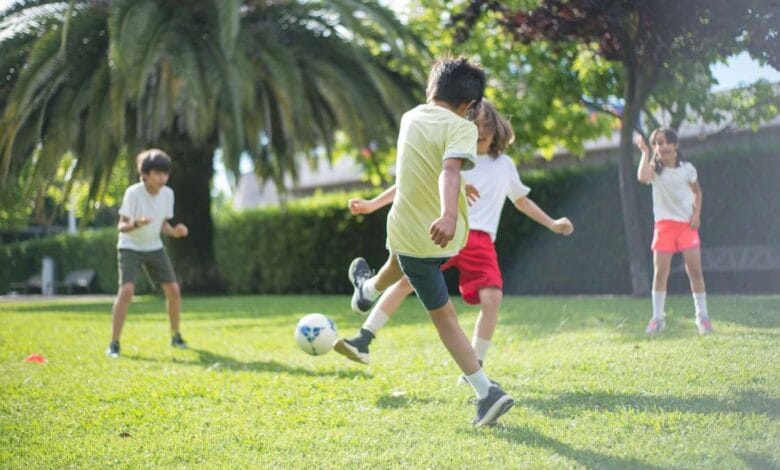
Imagine two children growing up in the same neighborhood, sharing the same streets and the same sunsets. One runs across a dusty field every evening, chasing a ball, laughing with teammates, and learning to keep going even when tired. The other stays indoors, watching the world from a distance. Years pass quietly. When they meet again as adults, the difference is not just in their routines, but in their health, energy, and how they move through life.
Researchers this pattern. A long-term study followed more than 6,000 people from childhood into adulthood over about 25 years. Participants came from different socioeconomic and geographic backgrounds across North America and Europe. The goal was to examine whether organized sports in childhood are linked to adult physical activity, weight, and cardiometabolic health.
The findings showed that children who participated in organized sports were more likely to remain physically active as adults. They had about a 30 percent higher likelihood of meeting recommended physical activity guidelines.
Long Term Benefits of Childhood Sports Participation
Childhood sports participation is associated with measurable differences in adult health. Adults who played sports as children had lower average body weight. Their Body Mass Index was about 1.8 units lower compared to those who did not participate. They also had smaller waist circumference and lower blood pressure. The study also reported differences in lipid profiles. Participants who engaged in sports during childhood had higher levels of HDL cholesterol. This pattern is linked to lower cardiometabolic risk.
These outcomes may relate to early habit formation. Structured sports introduce regular physical activity, motor skill development, and scheduled routines. These patterns can continue into adulthood, even when work or lifestyle changes reduce activity levels. The study also included mental health measures. Participants who played sports in childhood reported lower levels of anxiety and depressive symptoms, along with higher stress resilience scores. These findings are based on self-reported data and show an association rather than causation.
Why Childhood Sports Participation Matters
Access to organized sports varies across populations. Factors such as household income, school programs, and community infrastructure affect participation rates. Children from higher-income backgrounds are more likely to engage in structured sports. The study adjusted for socioeconomic variables, including parental activity levels and baseline health. The association between childhood sports and adult health outcomes remained after these adjustments, though some confounding factors may still exist.
Regional comparisons showed differences in long-term activity patterns. European cohorts with stronger school-based sports programs had slightly higher retention of adult physical activity. This suggests that access and institutional support influence outcomes. The study has limitations. Some measures relied on retrospective self-reporting. There may also be selection bias in the sample. The observational design does not establish causality, and genetic or environmental factors may influence the results.
A Simple Habit with Lifelong Impact
Childhood represents a period where long-term behavioral patterns can form. Participation in organized sports during this stage is associated with continued physical activity, lower BMI, and improved cardiometabolic markers in adulthood. These patterns are also linked to lower risk factors for conditions such as cardiovascular disease, obesity, and type 2 diabetes. Mental health associations include lower reported anxiety and improved resilience.
Encouraging consistent participation in age-appropriate sports, along with access through schools and communities, can support these outcomes. The focus remains on regular activity and skill development rather than competition. Early engagement in structured physical activity is associated with adult health trajectories. Further research is needed to examine differences based on sport type, intensity, and duration.
FAQs on Childhood Sports Participation Shape Adult Health Outcomes
Q: How do childhood sports affect health in adulthood?
A: Childhood sports are linked to higher levels of physical activity in adulthood. People who played organized sports early are more likely to stay active, maintain lower body weight, and show better heart health indicators. These patterns can reduce the risk of chronic diseases later in life.
Q: What are the long term benefits of playing sports at a young age?
A: Playing sports during childhood is associated with lower BMI, healthier blood pressure, and improved cholesterol levels in adulthood. It also supports the development of consistent exercise habits that often continue later in life. Mental health benefits such as lower stress and better resilience are also reported.
Q: Does playing sports as a child reduce the risk of heart disease?
A: Research shows that individuals who participated in sports as children tend to have better cardiometabolic markers, including healthier cholesterol levels and blood pressure. These factors are linked to a lower risk of heart disease. However, the relationship is associative and influenced by other lifestyle factors.
Q: Is it too late to get benefits if a child starts sports later?
A: Starting sports later in childhood still provides health benefits. However, earlier participation is more strongly linked to long-term activity habits and health outcomes. Even so, joining sports at any stage can improve fitness and support healthy routines.
Q: Are team sports better than individual sports for long term health?
A: Team sports may have a slight advantage because they include social interaction and structured schedules, which can help maintain long-term participation. However, individual sports also provide significant physical and mental health benefits. The key factor is regular and consistent involvement.
Q: How do childhood sports influence mental health in adulthood?
A: People who played sports as children often report lower levels of anxiety and depression later in life. Sports help build coping skills, discipline, and social connections. These factors contribute to better emotional stability and stress management over time.
Q: Why do some children not have access to organized sports?
A: Access to sports can depend on family income, school facilities, and community resources. Children in lower-income areas may have fewer opportunities to join structured programs. Expanding access through schools and community initiatives can help address this gap.
Q: Can childhood sports help prevent obesity in adulthood?
A: Participation in sports during childhood is linked to lower average body weight and reduced fat accumulation in adulthood. This is partly due to long-term physical activity habits formed early in life. These habits play a role in preventing obesity and related conditions.
Q: How much sports activity in childhood is needed for long term benefits?
A: The study suggests that regular participation in organized sports is important, but it does not define an exact threshold. Frequency, consistency, and engagement over time appear to influence outcomes. Ongoing research is examining how intensity and duration affect long-term health.
External Sources:
- Lehtola TS, Korhonen P, Wasenius N, Kautiainen H, Laine MK. Long-term effects of early sports participation on health-related quality of life: a cross-sectional study in Finland. European Journal of Public Health. 2026 Feb 6:ckag018. Doi: 10.1093/eurpub/ckag018.
- Batista MB, Romanzini CL, Barbosa CC, Blasquez Shigaki G, Romanzini M, Ronque ER. Participation in sports in childhood and adolescence and physical activity in adulthood: A systematic review. Journal of sports sciences. 2019 Oct 2;37(19):2253-62. Doi: 10.1080/02640414.2019.1627696.
Disclaimer:
Some aspects of the webpage preparation workflow may be informed or enhanced through the use of artificial intelligence technologies. While every effort is made to ensure accuracy and clarity, readers are encouraged to consult primary sources for verification. External links are provided for convenience, and Honores does not endorse, control, or assume responsibility for their content or for any outcomes resulting from their use. The author declares no conflicts of interest in relation to the external links included. Neither the author nor the website has received any financial support, sponsorship, or external funding. Photo by Kampus Production.