Two friends walk through a grocery store after school. One fills the cart with snack packets, soda bottles, frozen meals, and packaged sandwiches. The other chooses fruits, vegetables, and simple foods that are not heavily packaged. Both sets of food are common in modern diets, but researchers have started asking how these choices might affect heart health over time.
A large nutrition study in the United States examined this question by looking at the diets of thousands of adults. The researchers found a pattern. Adults who consumed the highest amounts of ultra processed foods were more likely to report a past heart attack or stroke than adults who consumed smaller amounts. The results add to research that examines how diets high in processed foods relate to cardiovascular health.
What Scientists Found in the Study
Researchers used data from the National Health and Nutrition Examination Survey. This national program collects diet and health information from people across the United States. The study included 4,787 adults aged 18 years and older. Scientists measured how much of each participant’s daily calorie intake came from ultra processed foods. These foods are industrial products that contain ingredients such as added sugar, salt, oils, flavoring agents, and preservatives.
Participants were grouped according to how much ultra processed food they consumed. Adults in the group with the highest intake had a 47 percent higher likelihood of reporting a previous heart attack or stroke compared with adults in the group with the lowest intake. The researchers adjusted their analysis for factors including age, sex, race and ethnicity, smoking status, and income. The association between higher ultra processed food consumption and cardiovascular events remained after these adjustments.
What Counts as Ultra Processed Food
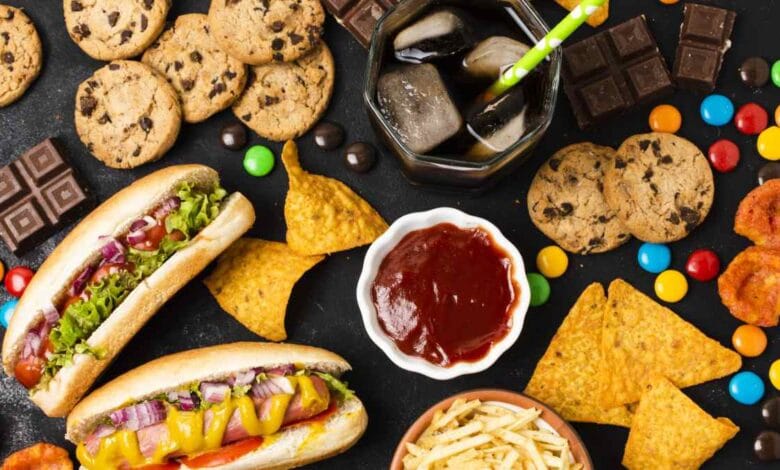
Ultra processed foods are common in many diets. These products are typically manufactured using ingredients that are refined or chemically modified during industrial processing. Examples include soda, packaged snacks such as chips and cookies, frozen ready to eat meals, instant noodles, and processed meats such as hot dogs or sausages. These foods often contain high levels of added sugar, refined starch, salt, and fats. Nutrition monitoring programs show that ultra processed foods now account for a large share of daily calorie intake for both adults and children in the United States.
Researchers studying diet and cardiovascular risk often focus on the nutrient profile of these foods. High sodium intake can increase blood pressure. Diets high in refined carbohydrates and certain fats can affect blood lipid levels. Many ultra processed foods also contain little dietary fiber. These characteristics are associated with conditions such as hypertension, inflammation, and abnormal cholesterol levels. Each of these conditions is linked with increased risk of cardiovascular disease.
Why the Study Does Not Prove Cause
The study identifies an association between ultra processed food intake and reported cardiovascular events, but it does not establish cause. This type of research is observational. Researchers examine dietary patterns and health outcomes within a population and identify statistical relationships. Observational studies can show consistent associations but cannot determine direct cause and effect.
Other factors can influence the results. People who consume higher levels of ultra processed foods may differ in physical activity, healthcare access, or other lifestyle factors that affect cardiovascular risk. Researchers attempt to adjust for some of these variables, but not all factors can be measured or controlled.
Why Researchers Still Take These Findings Seriously
The results are consistent with patterns reported in other nutrition studies. Large meta analyses that combine findings from multiple international studies also report associations between higher ultra processed food consumption and increased risks of cardiovascular disease, coronary heart disease, and stroke. Clinical feeding studies provide additional information. Some controlled experiments show that diets high in ultra processed foods can lead to weight gain and measurable changes in metabolic markers within weeks. However, large randomized controlled trials that track heart attack or stroke outcomes after long term dietary changes are limited.
Because of the available evidence, many dietary guidelines recommend diets that include more whole and minimally processed foods. These foods include fruits, vegetables, whole grains, legumes, nuts, and unprocessed sources of protein. Research continues to examine how food processing, nutrient composition, and dietary patterns influence cardiovascular health.
FAQs on Ultra Processed Foods may Increase Heart Attack Risk
Q: What are ultra processed foods and why are they linked to heart disease?
A: Ultra processed foods are industrial products made with added sugars, refined starches, oils, and preservatives. Examples include soda, packaged snacks, and frozen meals. These foods often contain high salt and sugar but little fiber, which are factors linked to cardiovascular disease.
Q: Can eating a lot of ultra processed foods increase the risk of heart attack or stroke?
A: Research shows that people who consume the most ultra processed foods are more likely to report heart attacks or strokes. One U.S. study found a 47 percent higher likelihood compared with people who eat the least. The results show an association but not direct cause.
Q: What foods are considered ultra processed in everyday diets?
A: Common ultra processed foods include chips, cookies, soft drinks, instant noodles, frozen ready meals, and processed meats. These products usually contain multiple additives and undergo heavy industrial processing.
Q: How these ultra processed foods can affect cardiovascular health?
A: Many ultra processed foods contain high sodium, refined carbohydrates, and unhealthy fats. These nutrients can raise blood pressure and affect cholesterol levels. Over time, these changes may increase cardiovascular risk.


Q: Do studies prove that ultra processed foods directly cause heart attacks?
A: No. Most studies are observational, meaning they identify patterns between diet and health outcomes. They show a link between higher consumption and cardiovascular events but cannot prove direct causation.
Q: How much ultra processed food do people typically eat in the United States?
A: Nutrition data shows that ultra processed foods make up a large share of daily calories in the U.S. For many adults and children, these foods account for more than half of their total calorie intake.
Q: Which foods are better than ultra processed foods for heart health ?
A: Dietary guidelines often recommend whole and minimally processed foods for heart health. These include fruits, vegetables, whole grains, legumes, and fresh proteins. They provide more nutrients and fiber with less added salt and sugar.
Q: Can reducing ultra processed food intake improve heart health?
A: Some clinical feeding studies show that diets high in ultra processed foods can affect weight and metabolic markers. Replacing them with minimally processed foods may improve overall diet quality. Long term studies on heart attack or stroke outcomes are still limited.
External Sources
- Willett Y, Yang C, Dunn J, Benson K, Sajan K, Ferris A, Dye T, Hennekens CH. Consumption of Ultra-Processed Foods and Increased Risks of Cardiovascular Disease in US Adults. The American Journal of Medicine. 2026 Jan 24. Doi: 10.1016/j.amjmed.2026.01.012.
- You J, Hou J, Xie X, Xu R. Consumption of ultra-processed foods raises the possibility of cardiovascular disease-a meta-analysis. Nutrición Hospitalaria. 2025 Jan 1;42(1). Doi: 10.20960/nh.05325.
Disclaimer:
Some aspects of the webpage preparation workflow may be informed or enhanced through the use of artificial intelligence technologies. While every effort is made to ensure accuracy and clarity, readers are encouraged to consult primary sources for verification. External links are provided for convenience, and Honores does not endorse, control, or assume responsibility for their content or for any outcomes resulting from their use. The author declares no conflicts of interest in relation to the external links included. Neither the author nor the website has received any financial support, sponsorship, or external funding. Image by freepik.