Key Takeaways
- Three mosquito species ranked the same 119 volunteers in different orders.
- Skin bacteria and odor compounds differed between high-attraction and low-attraction groups.
- Aedes aegypti showed significantly higher attraction to male than female participants.
- Each mosquito species favored a distinct subset of the same volunteer cohort.
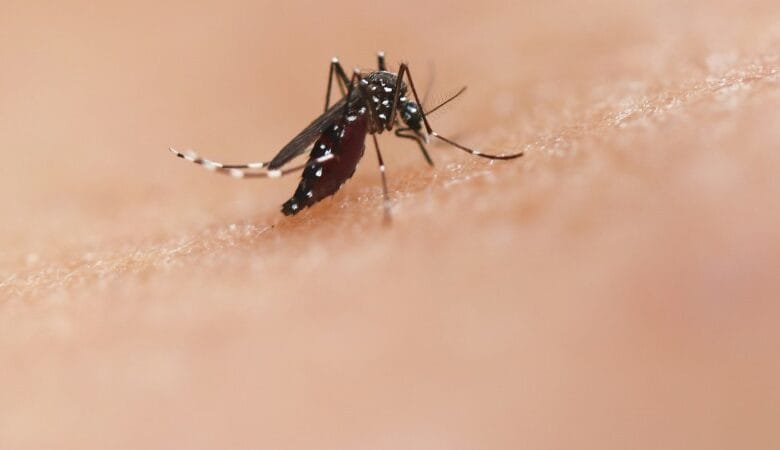
Mosquitoes are the world’s deadliest animal, causing more human deaths than any other creature, with malaria alone killing about 610,000 people in 2023. Dengue, carried mainly by Aedes aegypti, hit a record 14.6 million cases in 2024. Every one of those infections began the same way: a mosquito choosing a person to land on. That choice is exactly what a new study set out to measure.
Imagine standing in front of thirty mosquitoes and waiting for a response. Some volunteers in this experiment drew strong interest. Others earned little attention. The notable part is not that humans differ in appeal, since earlier studies showed that. The notable part is that three mosquito species, tested on the same 119 volunteers, did not agree on which people were appealing. A person one species favored was largely ignored by another. A 2026 study from Florida International University traced these differences to skin bacteria and skin odor compounds, and the results qualify an assumption many people hold.
The study, led by Kaylee Marrero and Matthew DeGennaro at Florida International University, asked whether different mosquito species find the same people attractive. The researchers recruited 119 volunteers. Each volunteer was tested against three disease vector species: Aedes aegypti, Aedes albopictus, and Culex quinquefasciatus. According to the university’s announcement, this was the first study to compare how multiple mosquito species respond to the same individuals; the work was designed to identify molecular signatures of mosquito attraction, to inform next-generation repellent design, and to serve as indicators of species-specific bite risk.
How the Researchers Measured Mosquito Attraction
Each volunteer completed all testing in one lab visit. This timing matters because skin chemistry changes over days, and the researchers wanted the behavior test, the odor samples, and the bacterial swabs to describe the same person on the same day.
The behavioral test used a uniport olfactometer, a chamber that separates mosquitoes from a human arm while allowing odor to pass through. A volunteer placed a forearm on one side while 30 female mosquitoes waited on the other. Over an eight-minute window, the researchers counted how many mosquitoes flew toward the arm. Each participant completed three trials with Aedes aegypti and three trials with Aedes albopictus, in randomized order. No mosquito was tested more than once.
Culex quinquefasciatus bites at night, so it required a modified protocol. Volunteers wore nylon stockings over their arms for 12 to 16 hours after their evening shower, which transferred skin odor into the fabric. The researchers froze the sleeves and later presented them to Culex mosquitoes under light of 0.05 to 0.1 lux, chosen to resemble moonlight. Skin microbiomes were sequenced with full-length 16S rRNA gene sequencing on a PacBio platform.
Why Each Mosquito Species Ranked the Same People Differently
Each species produced a different ranking of the same 119 volunteers. Each species favored a distinct subset of the cohort. The FIU announcement reports that not one participant ranked as highly attractive to all three species. In this study, attractiveness depended on the match between one person’s chemistry and one species’ responses, not on a fixed trait of the person.
One sex difference held up statistically. Aedes aegypti, the most human-adapted species in the test, showed significantly higher attraction to male participants. Aedes albopictus and Culex quinquefasciatus showed no significant sex difference. The lower scores for those two species indicate that Aedes aegypti responded more strongly in this setup than the other species did.
Which Skin Bacteria and Odors Each Species Responded To
The chemical and microbial data differed by species. Sequencing detected 246 bacterial taxa across the cohort, and all 119 volunteers shared only one skin bacterium. This number shows how variable individual skin microbiomes were. Several taxa were more abundant in men, including Staphylococcus epidermidis and members of the Anaerococcus, Corynebacterium, and Cutibacterium groups. The authors identify this pattern as a possible contributor to the Aedes aegypti sex difference.
Odor associations also differed by species. Attraction of both Aedes aegypti and Culex quinquefasciatus was associated with the absence of cyclic alcohols and monoterpenes. Attraction of Aedes albopictus was associated with the presence of ketones. These are correlations, not demonstrated causes.
What This Research Means for the General Public
Aedes aegypti and Culex quinquefasciatus chose people who lacked odors that repel them, such as cyclic alcohols and monoterpenes; for these species, love is the absence of a smell they dislike. Aedes albopictus did the reverse, seeking out people whose skin gave off specific attractive compounds, including ketones and sulcatone. On the microbial side, Anaerococcus bacteria on the skin can convert sweat into volatile fatty acids, which the researchers propose as the plume that draws Aedes albopictus in. One person’s skin can therefore be attractive to a species hunting pleasant cues and unappealing to a species avoiding unpleasant ones.
The conclusions that can be drawn are specific. First, the idea of a universal mosquito magnet does not match this evidence, since the same people received different rankings from each species. Second, skin chemistry and skin bacteria are confirmed as relevant variables in mosquito attraction, and they matter differently for each species. Third, individual skin microbiomes are far more varied than commonly assumed, which explains why attraction results differ so much between people. A fourth conclusion should stay narrow: the sex difference applies to Aedes aegypti only, was modest in size, and comes from one study.
The broader significance concerns future research. Aedes aegypti, Aedes albopictus, and Culex quinquefasciatus transmit diseases including dengue, yellow fever, and West Nile virus. Because these species respond to different human cues, mosquito control and transmit diseases treatment strategies may eventually need to account for species-specific signals rather than shared ones. Because the odor and bacterial signatures identified here are species-specific, they give researchers concrete targets for follow-up experiments on repellents and bite-risk assessment.
FAQs on Why Are Mosquitoes Attracted to Specific People?
Q: Why are some people more attractive to mosquitoes than others?
A: The study found that mosquito attraction is tied to skin chemistry, specifically each person’s unique mix of skin bacteria and odor compounds. All 119 volunteers shared only one skin bacterium out of 246 detected, showing how different individual skin profiles are.
Q: Do all mosquito species prefer the same people?
A: No. Each of the three tested species ranked the same 119 volunteers differently and favored a distinct subset. Not a single participant was ranked as highly attractive to all three species.
Q: Are mosquitoes more attracted to men or women?
A: In this study, Aedes aegypti mosquitoes were slightly more attracted to male participants. The other two species tested, Aedes albopictus and Culex quinquefasciatus, showed no significant difference between men and women.
Q: Can a person be a mosquito magnet to every species?
A: The evidence from this study does not support the idea of a universal mosquito magnet. Attractiveness depended on the match between one person’s skin chemistry and one species’ sensory responses, so the same person could rank high for one species and low for another.
Q: What role does skin bacteria play in attracting mosquitoes?
A: Skin bacteria are considered a relevant variable because they produce odor compounds that mosquitoes can detect. The authors hypothesize that for Aedes albopictus, bacteria such as Anaerococcus species break down sweat components into volatile fatty acids that may form attractive odor plumes.
Q: Which smells do mosquitoes avoid?
A: For Aedes aegypti and Culex quinquefasciatus, high attraction was associated with the absence of certain compounds such as cyclic alcohols and monoterpenes, suggesting these odors may repel or reduce attraction. Five compounds, including 1-penten-3-ol and 3-carene, were more prevalent in low-attraction participants for all three species.
Q: Which mosquito species spread dengue and Zika?
A: Aedes aegypti and Aedes albopictus are the two species in this study linked to dengue and Zika transmission. Culex quinquefasciatus is associated with West Nile virus.
Q: Can this research help me avoid mosquito bites?
A: Not directly yet. The study was conducted in a laboratory with lab-raised mosquitoes and did not test repellents, traps, or personal protection methods. The authors state the findings are intended to inform future repellent design and species-specific bite-risk research.
Q: How do scientists test which people mosquitoes prefer?
A: Researchers used a uniport olfactometer, a chamber that keeps mosquitoes separated from a human arm while odor passes through. They counted how many mosquitoes flew toward each volunteer’s arm over eight minutes, and for night-biting Culex mosquitoes they tested odor captured overnight on nylon stockings.
Q: Will this research lead to better mosquito repellents?
A: Possibly, but not soon. The study identifies species-specific molecular signatures that give researchers concrete chemical and bacterial targets for follow-up work on next-generation repellents. No repellent or application was developed or tested in this study itself.
References
Disclaimer:
Some aspects of the preparation of this content may be assisted by artificial intelligence or automated technologies and are subject to human editorial review and source verification. Readers are encouraged to consult the original research and primary sources for complete context. External links are provided for convenience, and TheHonores does not control or endorse their content. Relevant conflicts of interest, funding, sponsorship, or other disclosures are identified where applicable. This content is for informational purposes only and is not professional or medical advice. Images are for illustrative or representational purposes unless otherwise stated. Photo by National Institute of Allergy and Infectious Diseases on Unsplash.