
The 2026 Nobel Prize in Physiology or Medicine has been awarded jointly to Karl Deisseroth, Peter Hegemann and Georg Nagel for their discoveries concerning light-gated ion channels and optogenetics. The Nobel Assembly at Karolinska Institutet announced the award on October 5, 2026. Their work made it possible to control the activity of individual nerve cells using light, giving scientists a powerful way to investigate how neural circuits influence memory, emotions and behaviour.
Karl Deisseroth
Karl Deisseroth is an American psychiatrist, neuroscientist and bioengineer at Stanford University. He is a professor of psychiatry and behavioral sciences and bioengineering and an investigator at the Howard Hughes Medical Institute. Deisseroth’s key contribution was transforming light-sensitive proteins into a practical tool for neuroscience. His research demonstrated that channelrhodopsin could be introduced into nerve cells and used as a light-controlled switch, allowing researchers to activate or inhibit neurons with high precision. This work established optogenetics as a major method for studying neural circuits.
Peter Hegemann
Peter Hegemann is a German biophysicist and professor of experimental biophysics at Humboldt University of Berlin. His research focused on how microorganisms sense light. While studying the single-celled green alga Chlamydomonas, Hegemann identified light-sensitive proteins known as channelrhodopsins and helped establish that they could directly control ion movement across cell membranes. This discovery supplied the biological component that later made it possible to control neurons with light.
Georg Nagel
Georg Nagel is a German biophysicist and professor at the University of Würzburg. Working with Hegemann and other researchers, he helped identify and characterise channelrhodopsins, including channelrhodopsin-1 and channelrhodopsin-2. His experiments demonstrated that these proteins function as light-gated ion channels and could produce electrical responses when expressed in other cells. This finding was crucial to the development of optogenetics and its later application to neuroscience.
When Will They Receive the Nobel Prize?
The three laureates will receive their Nobel medals, diplomas and prize money at the Nobel Prize award ceremony in Stockholm on December 10, 2026, the anniversary of Alfred Nobel’s death. The 2026 Nobel Prize amount has been increased to SEK 12 million (~1.2 Million USD) per prize category. Since the Physiology or Medicine Prize is shared by three laureates, Deisseroth, Hegemann and Nagel will each receive SEK 4 million.
Why Is the Nobel Prize So Prestigious?
The Nobel Prize was established through the will of Swedish inventor and industrialist Alfred Nobel, who directed that much of his fortune be used to recognise achievements that confer the greatest benefit to humankind. The first Nobel Prizes were awarded in 1901. The Physiology or Medicine Prize is awarded by the Nobel Assembly at Karolinska Institutet for important discoveries in physiology or medicine.
Over more than a century, the prize has recognised discoveries that transformed science and medicine. Previous Medicine laureates include Alexander Fleming for penicillin, Frederick Banting and John Macleod for insulin, and James Watson, Francis Crick and Maurice Wilkins for discoveries concerning the molecular structure of nucleic acids and genetic information.
The 2026 award continues that legacy by recognising optogenetics, a technology that connects fundamental discoveries in microbial biology with precise control of neural activity. By discovering light-gated ion channels and developing ways to use them in neurons, Deisseroth, Hegemann and Nagel have helped establish a powerful approach for investigating the living brain.
FAQs on 2026 Nobel Prize
Q: What is the 2026 Nobel Prize in Physiology or Medicine for?
A: The 2026 Nobel Prize in Physiology or Medicine was awarded to Karl Deisseroth, Peter Hegemann and Georg Nagel for discoveries concerning light-gated ion channels and the development of optogenetics.
Q: Who won the Nobel Prize in Physiology or Medicine in 2026?
A: Karl Deisseroth, Peter Hegemann and Georg Nagel jointly won the 2026 Nobel Prize in Physiology or Medicine for research that enabled scientists to control nerve-cell activity using light.
Q: What is optogenetics and why did it win the 2026 Nobel Prize?
A: Optogenetics is a technique that uses light-sensitive proteins to control the activity of genetically targeted cells, particularly neurons. It has given researchers a precise way to study how neural circuits influence functions such as behaviour, memory and emotions.
Q: What did Karl Deisseroth contribute to the 2026 Nobel Prize?
A: Karl Deisseroth helped establish optogenetics as a practical neuroscience technique by demonstrating how light-sensitive proteins such as channelrhodopsin could be introduced into neurons and used to control their activity with light.
Q: What did Peter Hegemann discover that led to the 2026 Nobel Prize?
A: Peter Hegemann’s research on the green alga Chlamydomonas helped identify light-sensitive proteins called channelrhodopsins. These proteins provided the molecular basis for controlling cells with light.
Q: What did Georg Nagel contribute to optogenetics?
A: Georg Nagel helped characterise channelrhodopsins and demonstrated that they function as light-gated ion channels. His work showed how these proteins could generate electrical responses in cells when exposed to light.
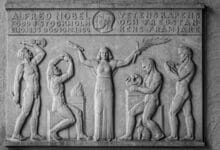

Q: How much money do the 2026 Nobel Prize winners receive?
A: The 2026 Nobel Prize amount is SEK 12 million per prize category. Because the Physiology or Medicine Prize is shared equally among three laureates, Karl Deisseroth, Peter Hegemann and Georg Nagel will each receive SEK 4 million.
Q: When will the 2026 Nobel Prize in Medicine winners receive their awards?
A: The three laureates will receive their Nobel medals, diplomas and prize money at the Nobel Prize award ceremony in Stockholm on December 10, 2026, the anniversary of Alfred Nobel’s death.
Q: Why is the Nobel Prize in Physiology or Medicine so prestigious?
A: The prize has recognised discoveries that have fundamentally changed medicine and biological science for more than a century. Previous laureates include Alexander Fleming for penicillin and Frederick Banting and John Macleod for the discovery of insulin.
References
- Press release. NobelPrize.org. Nobel Prize Outreach 2026. Nobel Prize in Physiology or Medicine 2026. Mon. 5 Oct 2026. Available from: https://www.nobelprize.org/prizes/medicine/2026/press-release/ and https://www.nobelprize.org/prizes/medicine/2026/summary/
- TheHonores. 2026 Nobel Prize in Physiology or Medicine: How Light Became a Neural Switch. October 5, 2026. Available from: https://thehonores.com/2026-nobel-prize-in-physiology-or-medicine-optogenetics/
Disclaimer:
Some aspects of the preparation of this content may be assisted by artificial intelligence or automated technologies and are subject to human editorial review and source verification. Readers are encouraged to consult the original research and primary sources for complete context. External links are provided for convenience, and TheHonores does not control or endorse their content. Relevant conflicts of interest, funding, sponsorship, or other disclosures are identified where applicable. This content is for informational purposes only and is not professional or medical advice. Images are for illustrative or representational purposes unless otherwise stated. Images obtained from Karl Deisseroth – Stanford Medicine, CAP Profiles; Peter Hegemann – Millencolin, CC BY-SA 4.0, via Wikimedia Commons; Georg Nagel – Millencolin, CC0, via Wikimedia Commons