Key Takeaways
- Human PROCR-positive cells formed expandable pancreatic islet organoids in laboratory culture.
- Organoids produced insulin, glucagon, somatostatin and pancreatic polypeptide after maturation.
- Matured organoids released C-peptide in response to glucose stimulation.
- Transplanted organoids improved glucose control in diabetic mice and macaques.
Diabetes is a growing health concern worldwide. The International Diabetes Federation estimates that 589 million adults aged 20 to 79 were living with diabetes in 2024, or about one in nine adults. This number could rise to 853 million by 2050. In type 1 diabetes, the immune system destroys the insulin-producing beta cells in the pancreas, leaving the body unable to regulate blood glucose without insulin. Finding ways to replace these lost cells remains an important goal in diabetes research.
A 2026 study has explored one possible approach: growing new pancreatic islet cells from adult human tissue. Researchers used PROCR-positive cells to produce pancreatic organoids, which released insulin and other hormones. When transplanted into two diabetic macaques, the organoids were linked to a reduction of about 50% in insulin requirements. The result is encouraging, but the animals still needed insulin, and the small study leaves key questions about cell identity, organoid maturity and long-term safety. Could these laboratory-grown organoids one day help replace the insulin-producing cells lost in diabetes?
How did researchers grow human pancreatic islet organoids?
Pancreatic islets are small groups of cells that release hormones to control blood glucose. Beta cells produce insulin, while alpha cells produce glucagon. Delta cells produce somatostatin, and PP cells produce pancreatic polypeptide.
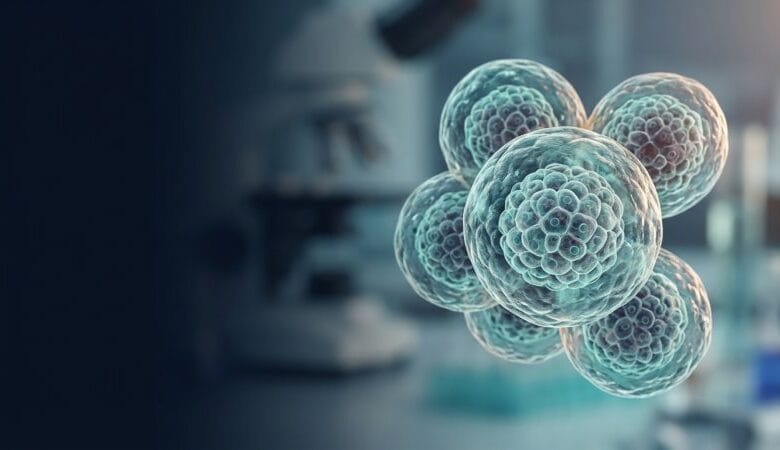
Organoids are small, three-dimensional structures grown from cells in a laboratory. They can reproduce some features of the organ or tissue from which the cells come. Pancreatic islet organoids are designed to resemble the islets of the pancreas, which contain hormone-producing cells such as insulin-producing beta cells and glucagon-producing alpha cells. PROCR-positive cells are cells that express a protein called protein C receptor (PROCR). PROCR-positive cells are the starting cells used to grow pancreatic islet organoids.
In a 2026 study posted on bioRxiv, researchers isolated PROCR-positive cells from human pancreatic tissue donated after death. PROCR is a protein found on the surface of the cells selected for the study. The researchers grew these cells into three-dimensional structures called PICO organoids. PICO stands for PROCR-positive cell-derived, islet-resident, clonogenic organoids. The study also follows earlier research published in Cell in 2020. That study identified PROCR-positive progenitor cells in mouse pancreatic islets and showed that they could form organoids in the laboratory. The 2026 study examined whether researchers could use a similar method with adult human pancreatic cells.
The researchers maintained the human organoids through repeated cycles of growth, called passages. The organoids remained in culture for more than five months and passed through at least ten passages. The paper reports an average of about 500 billion organoids at passage 10, based on seven donors. It also reports a 300-million-fold expansion. During the expansion stage, the researchers changed the culture conditions and allowed the organoids to mature for 12 days. The resulting structures contained insulin-producing beta cells, glucagon-producing alpha cells, delta cells and PP cells.
The researchers tested whether the cells responded to glucose. The organoids released human C-peptide, a marker of insulin production. Their glucose-stimulated C-peptide secretion was about half that of fresh human islets. The cells were not fully mature, however. Single-cell analysis showed that only about 24% of the organoid beta-cell population had gene-expression profiles that overlapped with primary human beta cells. Producing insulin did not mean that the cells had the same molecular characteristics as mature beta cells.
Did the human pancreatic organoids improve diabetes in animals?
The researchers tested the organoids in mice made diabetic with streptozotocin, a chemical that damages insulin-producing beta cells. They transplanted the human organoids under the kidney capsule of the mice. Each mouse received about 800 to 1,000 organoids, with an estimated total of 500,000 cells. Blood glucose levels fell within a week of transplantation. The researchers analysed 62 mice at about four months and reported results from 11 mice at one year. The transplanted organoids improved glucose control, and the researchers detected human C-peptide in the mice after a glucose challenge. The researchers also removed the kidney containing the transplanted organoids in a separate test. Blood glucose rose sharply after removal. This result linked the improvement in glucose control to the transplanted tissue.
The team then tested the organoids in two Cynomolgus macaques with diabetes. Each animal received a single infusion of human organoids through the portal vein. Both also received immunosuppressive drugs to reduce the risk of immune rejection. During the 16-week follow-up, both macaques showed improved glucose measurements and needed about half as much injected insulin as before transplantation. Their HbA1c levels also fell. Neither animal stopped insulin treatment. These experiments show that the transplanted organoids affected glucose control in the animals studied. They do not show that the approach works as a treatment for people with diabetes.
What are the key takeaways and future directions?
The study provides evidence that PROCR-positive cells isolated from adult human pancreatic tissue can be expanded into organoids with several features of pancreatic islets. The organoids produced pancreatic hormones, released C-peptide in response to glucose and improved glucose control after transplantation in mice and two macaques. These findings support further research into adult human pancreatic cells as a possible source for islet cell replacement.
However, the identity of PROCR-positive progenitor cells in adult human islets remains an open question. A 2025 study did not find this cell population in other adult mouse or human pancreatic islet datasets. A separate 2026 study reported hormone-producing organoids from adult human PROCR-positive cells, but used a different set of markers. This supports related research, not a direct replication of the PICO findings.
The organoids also showed limits in maturity, with gene-expression profiles that differed from primary human beta cells. Their density fell by about 60% during maturation. The use of animal-derived Matrigel may also complicate clinical production. In addition, the macaque study involved only two animals, lasted 16 weeks and required immunosuppressive drugs. It did not establish whether the grafts could withstand the autoimmune attack seen in type 1 diabetes.
Further studies must confirm the identity and function of PROCR-positive cells, improve organoid maturity, reduce cell loss and assess long-term graft safety. The 2026 report is a preprint that has not been certified by peer review. Human trials will be needed to determine whether this approach can provide safe and lasting benefits for people with diabetes.
FAQs on Human Pancreatic Organoids potential Diabetes Treatment
Q: What are human pancreatic organoids?
A: Human pancreatic organoids are small, three-dimensional structures grown from human pancreatic cells in a laboratory. They reproduce some features of pancreatic tissue and can develop into hormone-producing cells, including insulin-producing beta cells.


Q: How do PROCR-positive cells help grow pancreatic organoids?
A: PROCR-positive cells express a protein called protein C receptor (PROCR). In the 2026 study, researchers isolated these cells from adult human pancreatic tissue and used them as starting cells to grow pancreatic islet organoids. Their identity and role as adult pancreatic progenitor cells still need independent confirmation.
Q: Can pancreatic islet organoids produce insulin?
A: Yes. The organoids in the 2026 study developed insulin-producing beta cells and released human C-peptide in response to glucose. However, their glucose-stimulated C-peptide secretion was about half that of fresh human islets, and their beta cells did not fully match the gene-expression profiles of primary human beta cells.
Q: Did human pancreatic organoids reverse diabetes?
A: Transplanted organoids improved glucose control in diabetic mice and two diabetic macaques. However, the experiments did not show a cure. Further research needed to ensure its efficacy and practical implementation.
Q: Did pancreatic organoids reduce insulin requirements?
A: Yes. In the 2026 study, two diabetic macaques needed about 50% less injected insulin during the 16-week follow-up after receiving human pancreatic organoids. Both animals continued to require insulin, and the small study needs further investigation.
Q: Are human pancreatic organoids ready for use in diabetes treatment?
A: No. The findings come from animal experiments, and no human trials have established their safety or effectiveness. The 2026 study is also a bioRxiv preprint that has not been certified by peer review. Further research is needed before this approach can be considered a treatment.
Q: Could human pancreatic organoids become a treatment for diabetes?
A: Human pancreatic organoids could offer a future way to replace damaged or lost insulin-producing cells. Early animal studies show that transplanted organoids can improve glucose control, but researchers have not yet established their safety or effectiveness in people.
Q: Could lab-grown pancreatic cells reduce the need for insulin injections?
A: Potentially. In a 2026 study, two diabetic macaques needed about 50% less injected insulin after receiving human pancreatic organoids. However, both animals continued to need insulin, and human studies are required to determine whether the approach could have a similar effect in patients.
Q: Are pancreatic organoids a possible alternative to insulin therapy?
A: Researchers are investigating pancreatic organoids as a possible form of cell replacement therapy. The goal is to restore insulin production rather than rely only on injected insulin. However, this approach remains experimental and is not ready to replace current diabetes treatments.
Q: When will pancreatic organoid treatment be available for people with diabetes?
A: There is no confirmed timeline. Researchers must first improve organoid maturity, assess immune rejection and long-term safety, and conduct human clinical trials to establish whether the treatment works.
Q: Can pancreatic organoids treat both type 1 and type 2 diabetes?
A: It is too early to know. The main focus of this research is replacing insulin-producing cells, which is especially relevant to type 1 diabetes. Type 2 diabetes also involves insulin resistance, so replacing beta cells alone may not address the main causes of the condition.
References
- International Diabetes Federation (IDF). Facts & figures. Available from: https://idf.org/about-diabetes/facts-figures/
- Song W, Liu C, Wang S, Wang D, Xu Y, Yuan S, Chang J, Zhang B, Han X, Fu H, Bao H. Generation and long-term expansion of human pancreatic islet organoids in vitro. bioRxiv. 2026 Apr 20:2026-04. DOI: 10.64898/2026.04.15.718643.
- Wang D, Wang J, Bai L, Pan H, Feng H, Clevers H, Zeng YA. Long-term expansion of pancreatic islet organoids from resident Procr+ progenitors. Cell. 2020 Mar 19;180(6):1198-211. DOI: 10.1016/j.cell.2020.02.048.
- Andersson-Rolf A, Groot K, Korving J, Begthel H, Hanegraaf MA, VanInsberghe M, Salmén F, van den Brink S, Lopez-Iglesias C, Peters PJ, Krueger D. Long-term in vitro expansion of a human fetal pancreas stem cell that generates all three pancreatic cell lineages. Cell. 2024 Dec 26;187(26):7394-413. DOI: 10.1016/j.cell.2024.10.044.
- Heidenreich AC, Bacigalupo L, Rossotti M, Rodríguez-Seguí SA. Identification of mouse and human embryonic pancreatic cells with adult Procr+ progenitor transcriptomic and epigenomic characteristics. Frontiers in Endocrinology. 2025 Feb 13;16:1543960. DOI: 10.3389/fendo.2025.1543960.
- Darden CM, Kuncha J, Kirkland JT, Mattke J, Vasu S, Saravanan PB, Naziruddin B, Lawrence MC. Mechanisms inducing differentiation of adult islet progenitor-like cells into functional islet-like organoids. Frontiers in Transplantation. 2026 Feb 20;5:1740314. DOI: 10.3389/frtra.2026.1740314.
Disclaimer:
This article is based on a preprint that has not yet undergone peer review. Its findings should be considered preliminary until independently evaluated and validated. Once we are aware of its peer-review and publication, this article may be updated as per the published article.
Some aspects of the preparation of this content may be assisted by artificial intelligence or automated technologies and are subject to human editorial review and source verification. Readers are encouraged to consult the original research and primary sources for complete context. External links are provided for convenience, and TheHonores does not control or endorse their content. Relevant conflicts of interest, funding, sponsorship, or other disclosures are identified where applicable. This content is for informational purposes only and is not professional or medical advice. Images are for illustrative or representational purposes unless otherwise stated.